

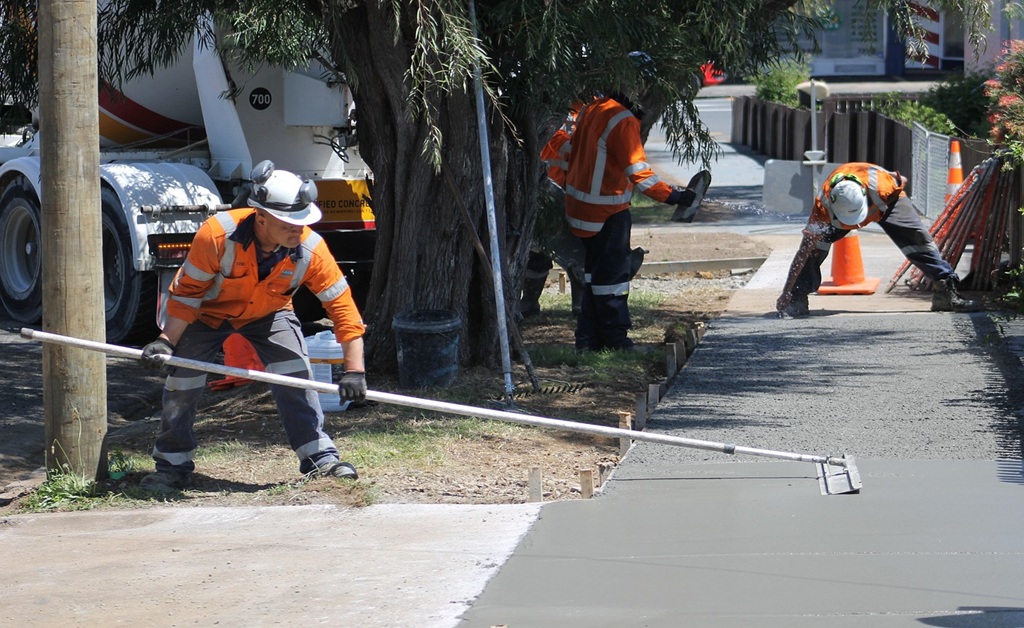
Fresh concrete is surprisingly strong-appearing, and it’s not uncommon for it to seem able to bear traffic just a few hours after application, but this is often not the case. Allowing traffic on concrete prematurely can easily lead to cracking and other problems that can jeopardize its longevity. As concrete experts, we can guide you on ways of determining the answer to ‘when can you drive on new concrete?’. So, stick with Bill’s Custom Concrete & Yard Drainage!
Understanding the Curing Process
Curing is a mechanism through which concrete achieves strength as a result of a chemical reaction between cement and water. This is not just about waiting for the surface of the concrete to dry, but rather waiting for it to attain its final strength. During this period, concrete becomes more resistant to pressures and weight because it becomes hard.
The curing time starts as soon as it is applied and can continue for a number of weeks, but the time frame until it is safe enough for vehicles is significantly sooner than that. Knowing how long before driving on concrete helps you avoid costly errors.
Factors that Influence Curing Time
There are some variables that influence concrete’s time required for full strength. All these we take into consideration while advising our clients, whether it’s for a driveway or even retaining walls in OKC.
Weather Conditions
Temperature is an important curing factor that contributes to curing rate. Hot weather helps hasten the chemical process of concrete strengthening, while low temperatures slow down this process significantly. If temperatures go below 50°F, they can bring about a halt or slowdown of this curing process. High humidity is a curing factor that can slow down this process by thwarting the rate of water evaporation.
Mix Composition
All concrete is not equal. Cement and water content, aggregate types, as well as any mix additives, all create differences in concrete cure time for driveway projects. Cement content is directly proportional to concrete strength development, and some mix additives can slow down or hasten this development, depending on their intended applications.
Thickness and Load Specifications
Whereas a typical residential driveway has a thickness of 4-6 inches and cures at a different rate than a commercial-grade parking lot intended for heavier applications, thicker applications typically take longer to cure, though they may still reach drivable surface strength on a comparable timeline.
General Timeline for Driving on Concrete
Though each project has its own nuances, we generally offer these guidelines for residential driveways and other surfaces.
Foot Traffic
It is likely that you can walk on concrete after 24 to 48 hours without doing any damage. You can tell that concrete is ready when it is firm and does not make impressions when walked on.
Passenger Vehicles
In regard to ordinary passenger vehicles and light trucks, we would advise waiting at least seven days before you drive on concrete. By this time, it is likely that the concrete has reached about 70% of its final strength, sufficient for road contact without damaging or cracking its surface.
Heavy Vehicles
If you have heavy vehicles that require parking on this concrete, you have to wait for a period of 28 days before doing so. By then, your concrete will be strong enough and won’t be affected by these heavy vehicles.
Why Personalized Advice is so Important
These timetables are only guidelines, and each actual installation is different. All projects are evaluated for project conditions before any suggestions can be made. Pouring a driveway project during a cold snap in November is going to have a different timeline than one installed in July, for instance, or a specialized mix as compared to regular concrete mix.
If you are working with experienced concrete professionals like Bill’s Custom Concrete & Yard Drainage, we can monitor the weather, tailor mix design based on optimal conditions, and offer specialized advice based on your project requirement. Even curing or managing moisture and temperature can be done through methods that heavily influence the end result.
Patience Pays Off
Allowing adequate time before traveling on concrete is more than a necessary step – it is a monetary investment that pays dividends down the road, such as preventing your concrete from cracking and wearing down from cars traveling on it.
Although it may be tempting to get out and enjoy your new driveway as soon as possible, remember that concrete is still strengthening months after the pour. Waiting these few days before actually getting to enjoy your driveway can save repairs and resurfacing down the road. If you have any questions about exactly when this is necessary for your project, we’re always available to help!

Rapheal Guinn at Bill’s Custom Concrete & Yard Drainage assists clients with concrete crack repairs, foundation work, and yard drainage solutions such as french drains and excavation.