
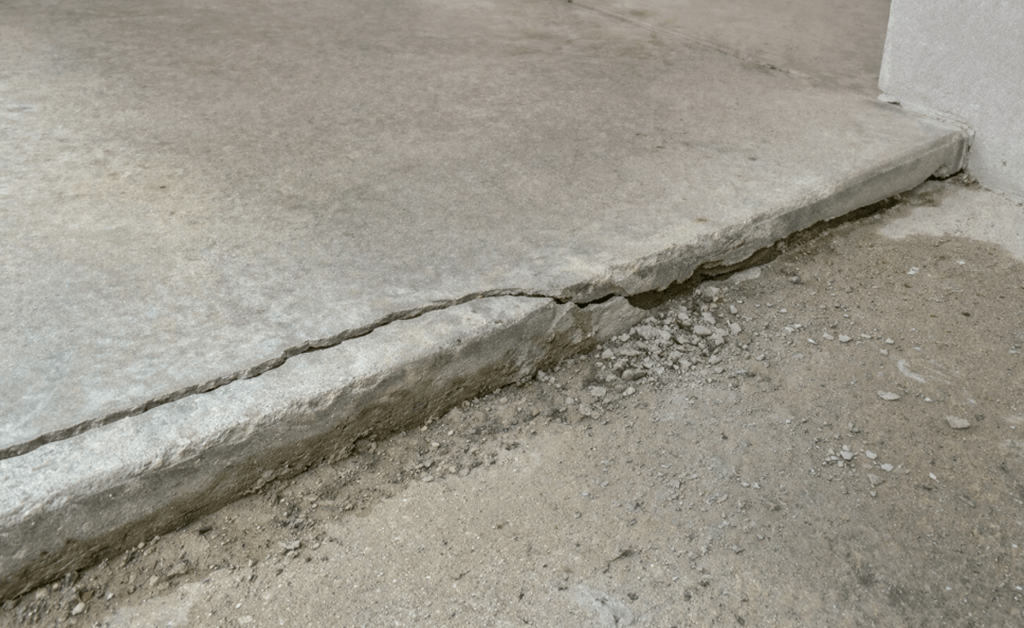
Settling concrete is one of those problems that just appears out of nowhere (sorry!). One day everything is fine, and the next, you notice a line forming or an area in the driveway that was not there before. If you are experiencing problems with settling concrete, you are not alone, and the good news is, it can be corrected.
At Bill’s Custom Concrete, we have helped numerous individuals with their concrete problems – as Edmond concrete contractors, we’ve seen it all. Learning about the causes and the solution for settling concrete will save you a lot of headaches in the future!
What Causes Concrete to Settle?
Your concrete does not just fall or sink into the ground for no reason. There is a reason for it, and it is generally something going on underneath it. One of the main causes of settling concrete is erosion. Erosion can cause the ground underneath your concrete to fall or sink, resulting in settling concrete. This can be avoided by making sure you have adequate drainage in your yard. If you’re already dealing with these issues, seeking concrete settling repair services promptly can help prevent further damage and restore your surfaces.
Another cause of settling concrete is improper soil compaction. This means the ground was not properly prepared before the concrete was poured, and it will eventually fall or settle unevenly over time because of the soil compressing underneath the concrete from the weight. In many cases, concrete settlement repair becomes necessary when this happens.
Also, moisture can cause all sorts of problems. Moisture, or water, in the ground will expand, and when it dries, it will contract. This causes the ground underneath your concrete to shift, resulting in uneven surfaces over time.
How to Spot the Signs of Sinking Concrete
Cracks, for instance, are normally the first signs of a problem. Hairline cracks, though seemingly insignificant, can easily widen should the problem not be addressed. In many cases, concrete settling is the underlying issue that causes these early warning signs to appear.
Another indicator is uneven surfaces. If you notice that some parts of your driveway or patio are lower compared to other parts, then you should be worried because it is a sure indicator of settling.
Water pooling can also occur. With settling concrete, it can eventually develop low spots where water will tend to pool instead of draining properly.
Repair Options That Actually Work
When it comes to repairing settling concrete, we often recommend two options that work:
Mudjacking is a process that has been in existence for decades. This process involves injecting a combination of mud, sand, and cement into the concrete, which in effect lifts it back into position. This is a viable option because it is quite cost-effective, though the material used is quite heavy and might end up settling even further in the future.
Another process, though not quite as traditional as the first, is the polyurethane foam injection process, which has also been seen to work quite well. This process involves injecting a lightweight material into the concrete, which in effect lifts it up into position. This process is quite fast and minimally invasive and will not add any weight to the soil underneath.
These two options are quite cost-effective compared to repairing parts of the concrete.
Don’t Wait – Address Settling Now
If you are experiencing settling, then you should not wait any further to fix the problem because small problems will eventually become bigger problems. What is a small problem today may become a bigger problem in the future, which may result in damaging your property (and bank account!).
We’ve worked with homeowners who have waited too long, and the price tag for the repairs is much steeper than it would have been if they had made the repairs sooner. If you are seeing any of the above signs of settling, it’s important to consider the potential concrete settlement causes at play. Contact a concrete professional at Bill’s today. We can assess the damage, figure out the best way to make the repairs, and get your concrete level and safe once again.
Taking care of your concrete today will ensure it stays in the best condition for years to come!