
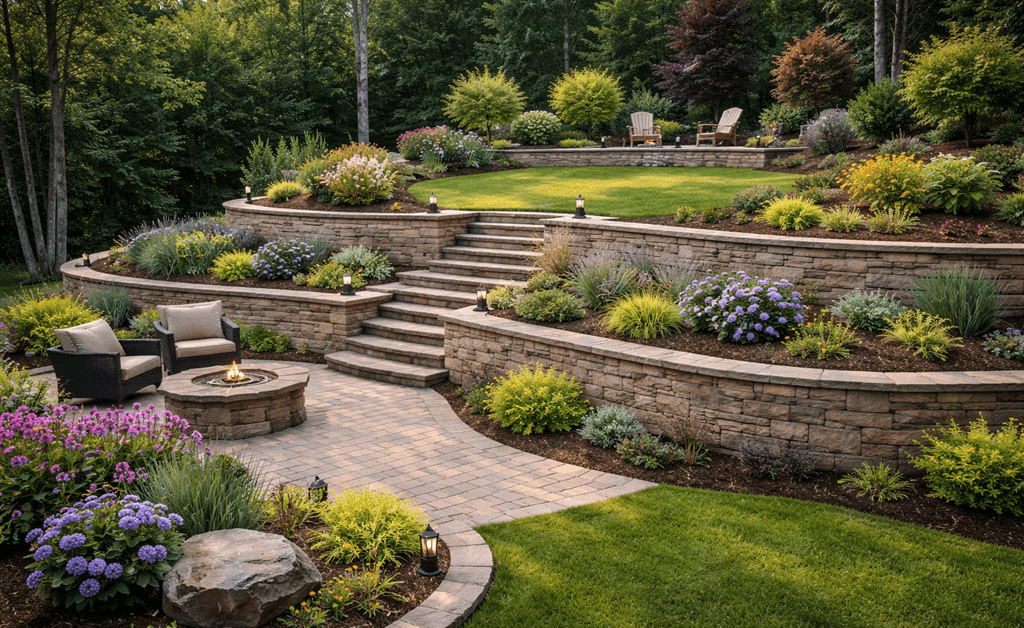
Dealing with runoff issues on a sloping property is a daunting task, especially when it comes to retaining walls. Without the right drainage solutions in place, excess rainfall can turn your perfectly planned and landscaped property into a muddy mess in no time. In fact, in the worst-case scenario, excess rainfall can even cause damage to your retaining walls.
At Bill’s Custom Concrete, we understand the need for the right drainage solutions, not just for your property, but also as a means of protecting your investment. As one of the most trusted foundation repair companies in OKC, we are committed to providing solutions you can rely on.
Why Retaining Walls Need Drainage Systems
Retaining walls are not just meant for keeping the land level in your landscaping or preventing the soil from flowing down the side of the hill. In fact, when you have a property that requires sloped yard drainage, retaining walls need to be appreciated as structures that need to keep back huge amounts of soil and water. Water that gathers behind retaining walls exerts pressure on the retaining wall. This pressure, called hydrostatic pressure, slowly bows, cracks, or even collapses retaining walls over a long period of time.
This is why we always emphasize the need for drainage systems in retaining walls. A slope drainage system can make all the difference in preventing major issues down the line.
Common Drainage Problems We Encounter
We have encountered a number of different issues when it comes to the drainage needs of retaining walls. One of the most obvious issues that we come across is the problem of soil erosion. Water flowing down the side of the hill without any control also means that soil erosion occurs, leading to unsightly gullies in your lawn.
Hydrostatic pressure also occurs on retaining walls that are unable to drain excess rainfall, slowly weakening the retaining wall over a long period of time. The end result is the failure of the retaining wall due to poor drainage solutions, leading to the need for the retaining wall itself to be rebuilt.
Proven Drainage Solutions That Work
Our team has several methods that we employ to ensure that the water continues to drain. Our best solution is using French drains. These are pipes with holes drilled along their sides. We lay these along a trench filled with gravel at the back of the retaining walls. The water collects here and then flows away from the retaining walls before it becomes too much. Our preferred location is at the bottom of the retaining walls, as it is more likely to collect water. If you’re searching for effective sloped yard drainage ideas, this approach is both proven and widely recommended.
Weep holes are used as a means of relieving pressure. The pressure is usually built up as a result of the hydrostatic pressure. To resolve this, we drill weep holes at intervals along the lower section of the retaining walls. The water then drains. Although it is not as complicated as other methods, it is surprisingly effective.
The use of gravel is another means of creating a system of drainage. Behind our retaining walls, we create a system of drainage using gravel. We do not fill the space with dirt, as it would hinder the natural flow of water. The dirt would create more pressure. The space is filled with large pieces of gravel, which allow water to flow down to the French drains.
Getting the Drainage Right From the Start
Every sloped landscape is unique, depending on the type of soil, the grade, and the rainfall conditions in the area. We have learned over the years it takes a professional eye to assess the potential problems before they become an expensive repair job. We assess the natural water flow in your landscape, the drainage capabilities of the soil, and create a system that works with the landscape, not against it. If you’re searching for drainage solutions for a sloped yard, our expertise ensures your property will remain protected and functional.
Proper drainage is not just about keeping the water from damaging the retaining walls; it is about creating a landscape that will perform beautifully year after year. If you are considering a retaining wall project or are experiencing drainage issues with your sloped landscape, we are here to help create a solution for you to protect your investment for years to come!
