
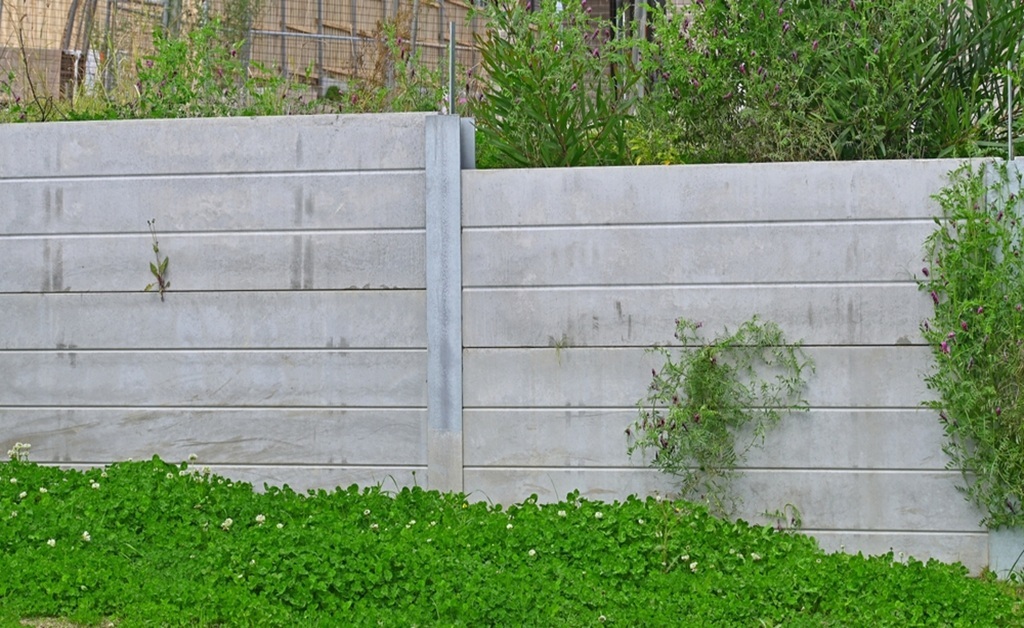
Like at Bill’s Custom Concrete & Yard Drainage, foundation repair companies in OKC often receive this inquiry at least once a week from a client seeking a cheap means of building a retaining wall. Concrete bag retaining walls, also known as stackable concrete block walls, have been gaining popularity as an alternative to concrete walls or stone walls for those with do-it-yourself skills. But the question remains: do concrete bag retaining walls last?
We have actually seen scores of such systems in the past and examined just how well such systems work in our unique weather conditions in Oklahoma. From hot summer conditions that see temperatures soar above 100 degrees Fahrenheit to unexpected winter freezes, our weather conditions challenge any concrete bag retaining wall system.
Factors That Influence the Longevity of Concrete Bag Retaining Walls
The lifespan of concrete bags for a retaining wall is largely influenced by several crucial elements that we have noted through our years of installation and servicing projects.
Proper Installation Foundation
This is either make or break in terms of a retaining wall installation. We always dig at least 6 inches below grade and provide a compacted gravel base. This is often the reason why DIY projects fail in the first few years because it’s missed or because it’s not compacted well.
Drainage Issues
In Oklahoma, the type of soil that is prevalent is a type of clay soil. This type of soil is a real sponge when it comes to rainwater, thus exerting huge pressures against concrete bag walls. We install a tile drain system behind all our retaining wall with concrete bags that we construct.
Local Soil Conditions
Our large clay soils in our region of OKC also pose a challenge. This type of soil swells when it is wet, and compacted as it dries out. We do find that concrete bag walls work well when placed in an appropriately prepared soil setting.
Height and Load Specifications
In our experience, concrete bag walls are more suitable for walls that are less than 4 feet in height. We have seen that walls that go above that height tend to have problems in 5 to 7 years, depending upon their use, such as supporting heavy loads or handling issues related to water runoff.
Weighing the Pros and Cons
Advantages We’ve Observed
Cost-effectiveness is one of its standout features. In fact, concrete bag walls are always 40-60% cheaper than concrete walls that have been poured in place.
Another area that amazes our clients is installation speed. You can install most concrete bag walls within a 1-2 day period, while a concrete wall installation may take a whole week or more. Similarly, it is easy to repair.
If individual units become cracked or displaced, you can replace units without rebuilding walls.
Possible Disadvantages
Longevity is at the top of our list of disadvantages. Although concrete bag walls that have been correctly installed will easily live for 15 to 20 years, we have witnessed those that have been wrongly installed to have a lifespan of less than 5 years.
Certain aesthetic limitations and issues also upset some of the home’s owners. This is because a uniform concrete block pattern lacks a custom feel that is provided by a natural stone appearance or decorative concrete texture.
Another drawback is that of load-carrying capacity. Such walls aren’t suitable for heavy usage or where the water pressure is substantial.
Our Professional Assessment
We have been placing retaining walls in the Oklahoma City metro region for many years, and we feel that they are a sound investment when done right.
In smaller residential designs that are less than 4 feet in height and with proper draining, we have seen that such walls will work well for 15 to 20 years. This is, of course, provided that installation is done professionally.
Call Bill’s Custom Concrete & Yard Drainage today to discuss your project – our specialists can provide tailored advice for long-lasting solutions!

Rapheal Guinn at Bill’s Custom Concrete & Yard Drainage assists clients with concrete crack repairs, foundation work, and yard drainage solutions such as french drains and excavation.