

Sometimes the slightest precipitation can ruin the beauty of your yard. Not only do puddles harm your lawn, but they also turn your entire living area into one huge swamp. Besides making your yard look unsightly, water can get under your house’s foundation and lead to expensive fixes. Immediate action must be taken in order to protect your property in the future.
Being specialists at Bill’s Custom Concrete & Yard Drainage, we come across quite a lot of gardens where there are puddles, thus threatening the integrity of the newly created patios and driveways. While pouring concrete, our main concern is perfect drainage. One of the most efficient methods of dealing with this problem we recommend and apply is a French drain solution.
The Ins and Outs of French Drains
Water follows the route of least resistance. Knowing how to fix a flooded backyard often starts with understanding this principle. French drains take advantage of this fact to preserve your landscaping.
What is a French Drain?
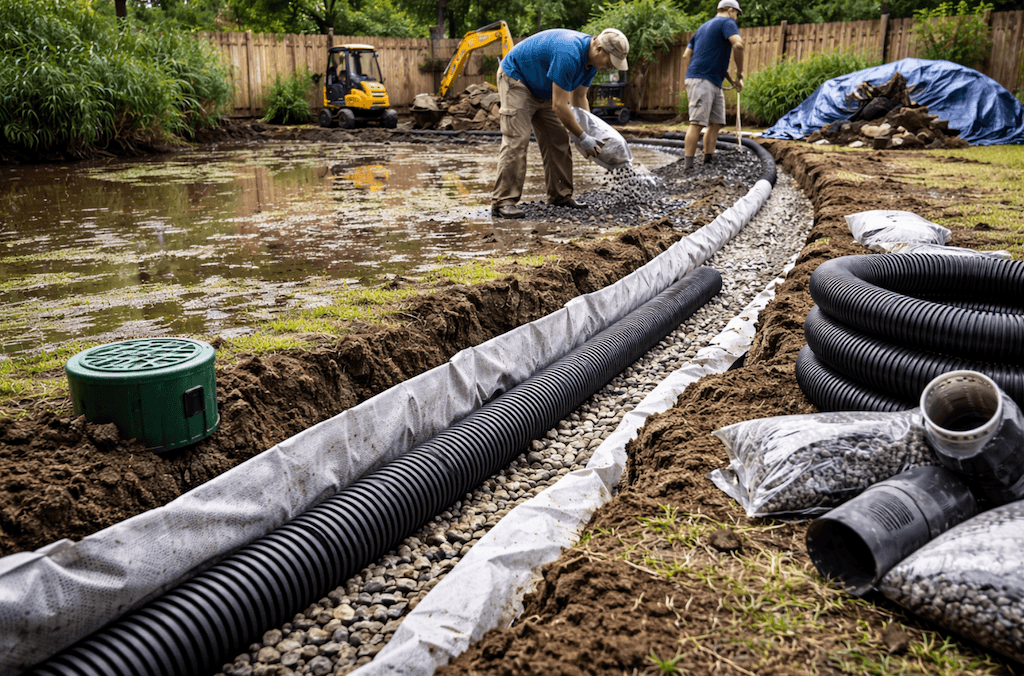
A French drain features a sloping trench filled with gravel and a perforated pipe. French drains serve as a conduit through which excess water travels.
How Does a French Drain Work?
The process starts with the groundwater getting attracted by your drainage system. It goes without saying that water always moves downward. Slopes in your trench directs it towards the proper outlet, whether it is dry well, storm drain, or some other area of your property. Learning how to fix a backyard that floods often depends on installing such effective drainage systems.
Professional French Drain Installation
Installation of any drainage system requires thorough preparation and professionalism. To make sure that everything runs properly, we strictly adhere to a certain procedure.
Creating the Trench
The first step in creating a French drain involves digging a trench in your yard. It is essential to make the proper sloping at this point because water always moves downhill. For the most effective backyard flooding solutions, proper planning is crucial at this stage.
Laying Down the Landscape Fabric
Once the trench is dug, we lay landscape fabric all around it both on top and at the bottom. This layer prevents soil and plant roots from entering the drain.
Adding the Gravel Layer
When everything is ready, we put in several inches of washed gravel which forms the base layer of the drainage system. This step is a crucial part of any effective backyard flooding fix.
Placing the Perforated Plastic Pipe
Afterward, we install a perforated plastic pipe into the trench. We also ensure that holes of this pipe face downwards so that water could flow into it.
Covering with Gravel and Landscape Fabric
One of the last things we need to do is cover the pipe with a layer of gravel leaving some free space at the top and wrap landscape fabric on both sides of it.
Topsoiling
In the end, we cover the drain trench with a layer of topsoil and sow new grass. Within a month, grass will grow back over the drain.
Keep Excess Water Away From Your Property
Excess water is a serious threat to the beauty and stability of your garden. Backyard flooding can result in cracks in your patio as well as sinking of your driveway. Good drainage will help you avoid costly fixes in the future. All concrete products we provide are guaranteed to last a lifetime, however, they can only survive long enough if proper drainage is ensured. Contact us today at Bill’s for French drains and custom concrete solutions!

Rapheal Guinn at Bill’s Custom Concrete & Yard Drainage assists clients with concrete crack repairs, foundation work, and yard drainage solutions such as french drains and excavation.