
Having a soggy yard after a rain is extremely annoying to homeowners. Rainwater should naturally flow from your property, rather than gathering near your home. If your backyard is flooding all the time, your house may have major drainage issues.
In our everyday experience, there is one powerful solution to such a problem: appropriate grading of your lawn. At Bill’s Custom Concrete & Yard Drainage, we understand precisely how to reshape your outdoor area to prevent further damage. When these issues seem overwhelming, reaching out to yard drainage professionals near me can be the best first step.
Problems with Yard Drainage
Bad drainage is dangerous as it leads to multiple consequences aside from just muddy shoes. Standing water drowns grass, causes mosquitoes to multiply, and erodes topsoil. The worst case scenario includes water accumulation near your home which inevitably results in moisture entering your basement and damaging concrete structures. Addressing how to improve drainage in yard situations will save you lots of money on future repairs.
What is Proper Grading?
Grading is a term used to describe a procedure during which a property owner changes their land’s level to make rainwater flow properly. Your ground should slope gradually away from your property’s foundation, allowing gravity to pull water in the right direction. By raising/lowering the level of your yard, you can create a perfect water drainage route. If you’re searching for yard drainage ideas, grading is a foundational approach that can make a big difference.
Steps to Fix Bad Drainage with Yard Grading – The Professional Way
Improper leveling of the soil is a problem solved by specialists who have access to necessary instruments. If you’re searching for drainage ideas for a yard, here is how we solve the issue.
Yard Assessment
We analyze your property and establish the location where water gathers. Besides, we determine the initial sloping of your terrain and identify any barriers like tree roots or walkways which could impact natural water flow. Our approach ensures we find yard drainage solutions suited to your specific situation.
Plan the Grading
We estimate the necessary drop in height to create a slope to guide water away from your home. For this purpose, we measure the drop using special surveying instruments. On average, the drop should reach six inches within ten feet from your property. When it comes to patios or hard surfaces, grading a patio for proper drainage is also essential to prevent water from pooling near your foundation.
Different Methods of Grading
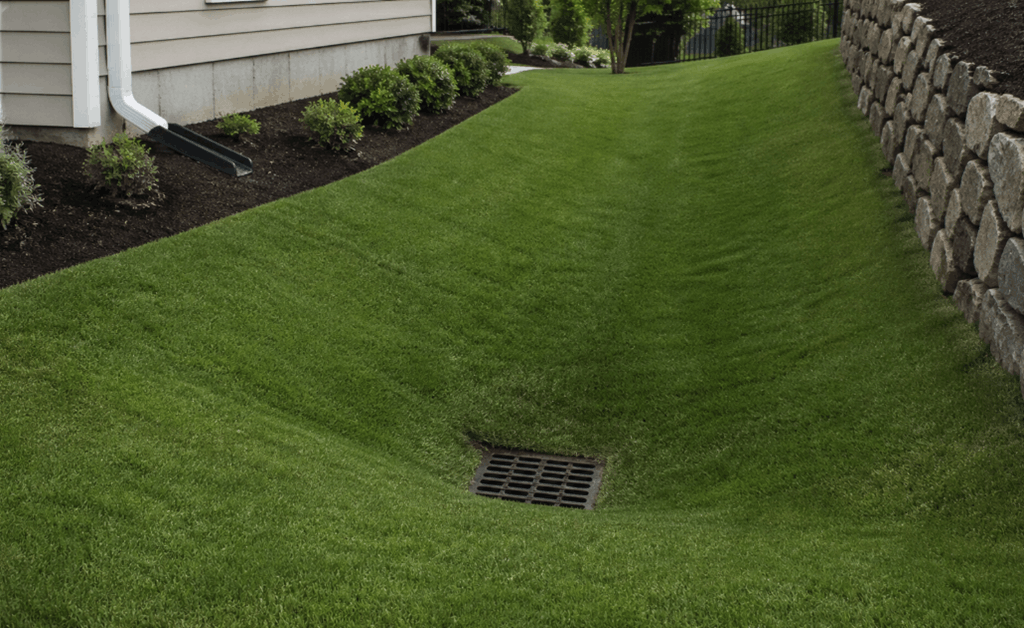
Depending on how complex the problem is, there are several ways to grade your lawn. First, we may cut swales (gentle dips) into the surface to allow water to flow to the storm drain. Second, in order to prevent certain areas from accumulating water, we create small dirt hills called berms. Lastly, in case of significant drainage problems, we may consider installing a French drain.
Materials Used for Grading
However, moving soil alone does not solve your problem completely. You need to combine your efforts and use a certain amount of dense fill dirt, gravel, and topsoil to create a smooth surface. Since we deal with custom concrete, we may pour concrete in a specially leveled place creating patio or pathway with appropriate slope.
Protect Your Property from Flooding
Water is a common element, and you should learn how to protect your property from it. The best way to avoid any problems with flooding is making your lawn slope properly to channel water away. Contact us now, and we will give you a helping hand in solving drainage problems!

Rapheal Guinn at Bill’s Custom Concrete & Yard Drainage assists clients with concrete crack repairs, foundation work, and yard drainage solutions such as french drains and excavation.