
People form opinions about your home fast. The driveway, the patio, the path up to the door – these surfaces tend to set the tone before anyone’s said hello. Color can change a lot here. The right shade makes a property feel warmer, or sharper, or just more looked-after. And these days you’ve got real choices. Gray is fine, but it’s hardly the only road left. So here’s a run through the colors people are actually choosing, and what to think about before you commit.
Why Colored Concrete Is Worth the Investment
How Colored Concrete Adds Beauty, Durability, and Long-Term Value
Color isn’t just decoration. The pigments we use go right into the mix, or they’re stained onto the surface afterward, and either way they’re built to last. Rain, sun, the school run, a car parked in the same spot for years – colored concrete shrugs most of it off. Paint can’t say the same. Paint clings to the top layer and gives up sooner or later, usually peeling at the edges first. Good colored concrete just keeps looking like itself, and it doesn’t ask much of you along the way.
Money comes into it too. A driveway or patio that’s obviously been planned reads as a home that’s been cared for, and buyers notice that sort of thing. That’s a big part of why concrete-cement coloring in Oklahoma City has caught on the way it has. We’ve seen owners earn back what they spent when they sell. Now and then they earn a little extra.
Popular Concrete Color Choices for Driveways and Patios
Earthy Tones: Tans, Browns, and Terracottas That Feel Right at Home
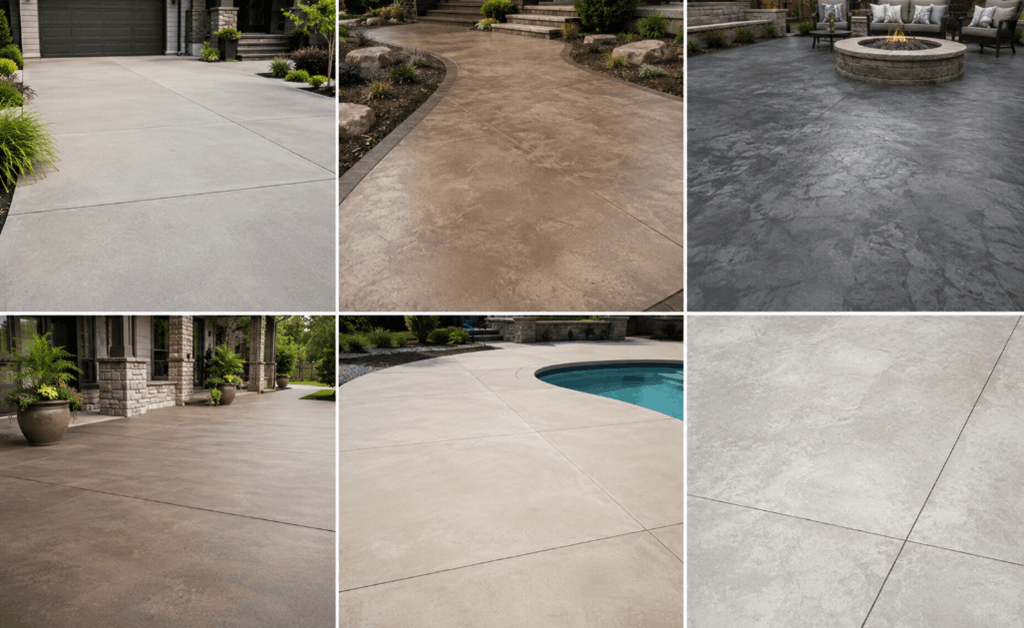
By a wide margin, earthy tones are what people ask for most. Tans, deep browns, that sun-baked terracotta – they sit easily next to natural things. Brick, timber fencing, sandstone, a garden full of native planting: all of it gets along with these shades. Lay a terracotta patio, and you get a loose, Mediterranean kind of mood, the sort that feels expensive and welcoming at once, which isn’t an easy combination to pull off.
The practical bit is worth mentioning. Earthy colors swallow dirt and small scuffs that would show up plainly on something pale. For a driveway that takes a daily beating, that matters more than you’d think, and it’s one reason colored concrete driveways in these tones hold up so well over the years.
Grey Tones: From Soft Silvers to Deep Charcoals
Forget the gray of an old sidewalk. We carry the whole range now. At one end, soft silvers that almost pass for white; at the other, charcoals dark enough to feel a bit moody. The lighter grays suit modern homes with white or rendered walls and pull the whole exterior together. Charcoal does the opposite job – it speaks up, and it works beautifully alongside dark trim and contemporary lines.
Caught in the middle? If you love honest, natural concrete but want it a touch more refined, a mid-tone gray with a brushed or exposed aggregate finish lands nicely. It’s one of those concrete driveway colors that flatters almost any home, and plenty of our clients at Bill’s Custom Concrete & Yard Drainage end up here, and few of them regret it.
Bold Colors: Blues, Greens, and Custom Mixes for a Standout Finish
Some people want their concrete to do more than blend in, and that’s where the fun starts. Deep slate blue carries a coastal, almost resort-like feeling – gorgeous against white render or beachside planting. Sage and olive greens slip into leafy gardens and quietly link the hard surfaces to everything growing nearby. If you’re hunting for concrete patio color ideas that stand out, this is the territory to explore.
And if you arrive with a very specific shade in your head, we mix custom colors too. Matching an existing feature, or chasing something you’ve never seen anywhere else – we can work it out either way.
Key Factors to Consider Before Choosing a Concrete Color
Matching Your Concrete Color to Your Home’s Exterior and Landscaping
No color exists on its own. Before you settle on anything, stand back and look at the full scene: your cladding, the roof, the window frames, whatever’s planted out front. Terracotta beside red brick can look wonderful. The same terracotta against a cool rendered facade can feel slightly off. Seeing the whole picture first saves you that kind of mismatch, and it’s how the best concrete color ideas usually come together.
How Climate and Sun Exposure Affect Concrete Color Over Time
Sun has a vote in how your color ages, whether you like it or not. Dark shades drink up heat, which gets unpleasant underfoot in summer and can wear faster where the UV is harsh. That’s worth keeping in mind with colored concrete for patios, where bare feet meet the surface all summer. Lighter tones throw that heat back and tend to suit open, sunny ground. We always factor in your local climate before suggesting anything, so the finish still looks right a few summers down the line.
Planning for Maintenance and Color Longevity
Sealing is the secret here. Every colored surface holds up better with it, since sealing shields the pigment from fading and keeps stains from settling in. We seal as part of our installs, then suggest resealing every two to three years, give or take, depending on how hard the surface works. One more thing: a mid-tone shade tends to age more gracefully than the extremes, hiding gradual wear better. Handy if low upkeep is high on your list.
Ready to Add Color to Your Concrete?
Coloring your concrete remains one of the easiest ways to lift a home’s whole exterior, and the options today really are good. Earthy warmth, a confident charcoal, a bold custom mix with some character – whatever you’re drawn to, we’ll help you get there.
Reach out to our team at Bill’s Custom Concrete & Yard Drainage to talk through your project and grab a free quote. We’d genuinely love to help you build something you’re proud to pull into every day.
Frequently Asked Questions
How Long Does Colored Concrete Last On A Driveway Or Patio?
With a solid install and the odd reseal, you’re looking at 25 to 30 years, often more. Climate, daily use, and how regularly you maintain it all shift that number.
Can Existing Concrete Be Colored, Or Does It Need To Be Replaced?
Usually you can color what’s already down, using stains or tinted overlays – a sensible, cheaper route as long as the slab is structurally sound. We check each project before we recommend anything.
Will The Concrete Color Fade Over Time?
A little fading is normal, especially with dark shades in full sun. Sealing regularly slows it right down and keeps the finish looking fresh for years longer.

Rapheal Guinn at Bill’s Custom Concrete & Yard Drainage assists clients with concrete crack repairs, foundation work, and yard drainage solutions such as french drains and excavation.