yard of concrete weigh

How Much Does a Yard of Concrete Weigh?

Get in touchConcrete has been holding up our buildings, roads, and bridges for a very long time, and contractors keep reaching for it because it simply works. Still, before you order a single yard, it pays to know how heavy the stuff really is. A driveway, a foundation, a structural slab. Each one hinges on getting those numbers right from the start. We pour concrete for a living at Bill’s Custom Concrete & Yard Drainage, so we’ve seen what happens when the weight math slips: equipment that can’t cope with the load, forms straining past their rated limit, subgrade that was never prepped for what came down on it.

So how much does a yard of concrete weigh? Honestly, more than most folks expect. The real answer depends on a handful of factors, and we’ll walk you through them one at a time.

How Much Does One Cubic Yard of Standard Concrete Weigh?

A standard cubic yard – the unit suppliers and crews measure by – usually runs between 3,600 and 4,050 pounds. That’s roughly 1.8 to 2 tons. If you’ve ever searched…how much does a cubic yard of concrete weigh? That range is your answer. Order a few yards for a large pour, and the total climbs fast.

Breaking Down Weight by Concrete Type

Pick a different mix, and you change the weight entirely.

Standard concrete sits in that 3,600 – 4,050 pound range, and it covers most residential and commercial jobs. Lightweight concrete trades traditional aggregates for materials like pumice or expanded shale, which can pull the figure down to around 2,700 pounds per cubic yard.

When you need to ease structural load – say, an upper-floor slab or a rooftop deck – that’s a genuinely useful option. Reinforced concrete heads the opposite way. Add steel rebar or wire mesh, and you’ll generally push past 4,000 pounds per cubic yard, depending on how much steel goes in.

The Difference Between Wet and Cured Concrete

Straight out of the truck, wet concrete outweighs the cured version. Water is the reason. A fresh mix still carries free water that hasn’t bonded with the cement or evaporated yet. During curing, some of that moisture works its way out, and the mass eases off with it. The difference is modest, but it matters when you’re calculating loads on formwork or temporary structures mid-pour. We spec shoring and forming off wet weight every time, without cutting corners.
cocrete yard in oklahoma city

What Factors Affect the Weight of Concrete?

Concrete weight isn’t one locked-in number. It shifts with the mix and with how the pour is handled.

How Water Content and Moisture Levels Change the Final Weight

The water-to-cement ratio carries real influence here. More water gives you a heavier wet mix and a different density once things set. Here’s the catch, though: too much water leaves a porous slab that can weigh less cured while ending up weaker. That’s a trade we won’t recommend. Knowing your concrete weight per yard before you finalize a mix can save you from exactly that mistake.

How Aggregate Type and Ratio Influence Concrete Density

Aggregates – sand, gravel, crushed stone – make up the bulk of any mix, often 60 to 75 percent of the volume. Dense stone such as granite or basalt gives you heavier concrete. Lighter choices like pumice or recycled material lower it. The balance of fine to coarse plays a part as well; a mix leaning on fine sand tends to be denser and heavier than one built around bigger, coarser stone.

How Air Content and Air Entrainment Reduce Overall Mass

Air entrainment sounds complicated, but it isn’t. Chemical admixtures fold tiny air bubbles into the mix. Those bubbles boost freeze-thaw resistance and make the concrete easier to place, and they also drop its density, which trims weight. A heavily air-entrained mix can weigh noticeably less per cubic yard, so build that into your structural figures. Running those numbers through a concrete weight calculator before the pour is a smart habit.

How Reinforcement Materials Add to the Total Weight

Steel rebar and wire mesh add real weight. Exactly how much comes down to size, spacing, and depth within the slab. On heavier structural jobs, we tally the concrete and its reinforcement together, then confirm everything below – subgrade through formwork – is rated to hold it.

How Admixtures and Additives Alter Concrete Weight

Chemical admixtures such as accelerators, retarders, plasticizers, and fly ash nudge density either way. Some lower the water demand and raise density; others introduce air or lightweight filler and lower it. Whatever we add, we weigh performance against weight before it ever hits the mix.

Frequently Asked Questions

How many bags of concrete make a cubic yard?

A standard 80-pound bag yields about 0.6 cubic feet cured. Since a cubic yard is 27 cubic feet, you’d need roughly 45 bags for a single yard. For most projects, bulk delivery is the far more sensible call.

Does the type of concrete mix affect how much I need to order?

It does! Lightweight and standard mixes yield differently, so the volume you need can shift with the structural demands of the job. Have a word with a specialist before you place the order.

Can the weight of concrete damage my subgrade or forms?

Yes, and it happens more often than people expect. Fresh concrete presses hard on forms and soil, both downward and sideways. Underrated formwork or unprepared subgrade opens the door to blowouts, settlement, or cracking. Plan the site properly, and you avoid the lot.

Get the Weight Right the First Time

Weight isn’t a minor detail on a concrete project – it shapes nearly every decision that follows, from the mix you choose to how you prep the ground beneath it.

We build custom concrete around the specific demands of each job. As top-rated concrete work contractors in Oklahoma City, we’re here whether you’re unsure which mix fits your project, how much to order, or how to ready your site for the load. Get in touch, and let’s build something that holds up!

Read More
cRulX28iCy(DHRwOyxao@Zq!

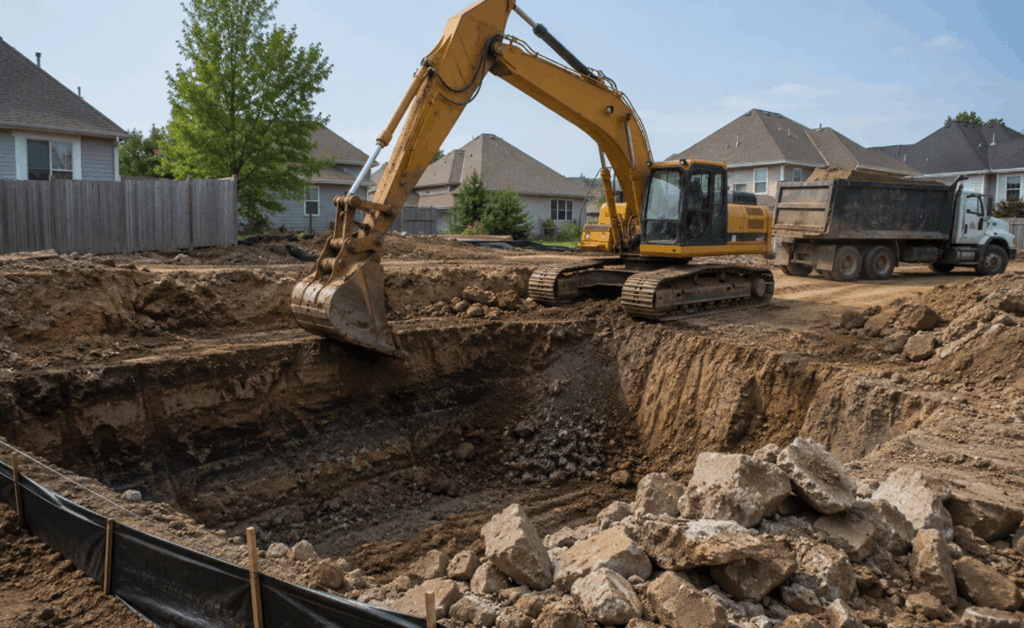
How to Excavate a Construction Site?

Every good build starts underground. Long before concrete gets poured, or the first wall goes up, the dirt has to be right. We pour custom foundations for a living at Bill’s Custom Concrete & Yard Drainage, and if there’s one thing we’ve learned, it’s that excavation sets the tone for everything that follows. Get it wrong, and you’ll feel it for the rest of the project.

Moving dirt sounds simple. It isn’t. It takes planning, a feel for the local ground, and a healthy respect for what’s buried beneath it. We’ve watched plenty of jobs stall out for weeks because someone treated the groundwork like an afterthought. After years of digging, grading, and pouring, we know what a clean excavation actually requires. Here’s how we do it.

Crucial Pre-Excavation Planning and Site Preparation

Before any heavy machinery touches the soil, we plan. Skipping this part is how you end up with severed utility lines, surprise costs, or a subgrade that won’t hold. As an experienced excavation contractor in Oklahoma City, we start with a full site assessment, checking soil quality, moisture levels, and whatever rock might be hiding below.

Conducting Thorough Topographical Site Surveys

A good topographical survey tells us the story of the land before we disturb it. We map the elevations and watch how water naturally wants to move across the property. That matters more than people expect. Where the water goes decides where we grade and how deep we dig.

Done right, this is what keeps your finished foundation dry. Water drains away from the structure instead of collecting against it. If you’ve ever wondered how to excavate a construction site the right way, this is a big part of the answer. We also work hand in hand with engineers to mark every hidden line on the property, so nobody puts a bucket through a gas pipe, a water main, or a buried cable.

Clearing the Work Area for Heavy Machinery

With the surveys in hand, we clear the site. That means pulling out vegetation, hauling off boulders, and clearing whatever debris is sitting in the work zone. We also lay out safe routes for our trucks and excavators to come and go. A clean, well-organized site keeps equipment from sinking into soft ground and keeps the crew out of harm’s way while the work ramps up.

Proven Excavation Techniques and Heavy Equipment

Digging is mostly about matching the right machine to the ground in front of you. Bring something too small, and you’re dragging out the timeline. Bring something too big, and you’re tearing up more of the site than you need to.

Selecting the Right Earthmoving Machinery

For most residential and commercial jobs, we lean on a mix of crawler excavators and backhoes. The crawler excavators handle the heavy work, digging deep trenches and shifting large volumes of soil in a hurry. Backhoes are the nimble ones, slipping into tight corners the bigger machines can’t reach. Choosing the right equipment is a huge part of any excavation in a construction site, and high-capacity dump trucks keep the spoil moving offsite so that the area stays workable.

Then there’s the ground that fights back. When we hit hard clay or embedded rock, we bring in hydraulic hammers and ripper attachments to break through the stubborn layers underneath.

Implementing Precise Trenching and Grading Techniques

The architectural plans drive our approach here. Trenching lets us run underground utilities and set the exact line for continuous concrete footings. We shore up trench walls as we go, because cave-ins are exactly the kind of thing safety codes exist to prevent, and we follow those codes to the letter.

Once the holes and trenches are dug, grading takes over. This is where the site gets smoothed to the precise elevation our concrete forms need. People underestimate grading, but a level subgrade is honestly the difference between a slab that lasts and one that cracks the first time the ground shifts unevenly beneath it.

FAQs

How Long Does A Typical Construction Excavation Take?

It depends on size, soil, and weather. A standard residential basement might wrap up in three or four days. A large commercial site full of rock could run a few weeks. We give you a real schedule once we’ve completed the initial survey.

What Happens To All The Dirt Removed From The Site?

We don’t just dump it and forget it. Good topsoil usually gets stockpiled onsite for later landscaping or final grading. Excess dirt, rock, or contaminated soil goes straight into the trucks and over to approved local facilities.

Can Severe Weather Affect The Excavation Schedule?

Absolutely. Rain turns the ground to mud, which swallows machines and makes the site dangerous. Frozen ground takes more force to break, which slows everything down. We watch the forecasts closely and adjust the plan when we have to, always with safety first.

Laying the Groundwork for Your Custom Concrete Project

Excavation isn’t just digging a hole. It’s the first real step toward the building you’ve been picturing, and good excavation in building projects is what every durable structure quietly depends on. Solid planning, the right machines, and operators who’ve done this a thousand times mean your site is ready when the heavy phases begin.

Because we handle both the dirt work and the concrete pouring, you get a smooth handoff from raw lot to durable foundation, with no gaps in between. If you’re about to break ground, we’d be glad to take the site prep off your plate. Reach out to our team today at Bill’s and let’s talk through your plans!

Read More
Concrete Color Ideas for Driveways & Patios

Concrete Color Ideas for Driveways & Patios

People form opinions about your home fast. The driveway, the patio, the path up to the door – these surfaces tend to set the tone before anyone’s said hello. Color can change a lot here. The right shade makes a property feel warmer, or sharper, or just more looked-after. And these days you’ve got real choices. Gray is fine, but it’s hardly the only road left. So here’s a run through the colors people are actually choosing, and what to think about before you commit.

Why Colored Concrete Is Worth the Investment

How Colored Concrete Adds Beauty, Durability, and Long-Term Value

Color isn’t just decoration. The pigments we use go right into the mix, or they’re stained onto the surface afterward, and either way they’re built to last. Rain, sun, the school run, a car parked in the same spot for years – colored concrete shrugs most of it off. Paint can’t say the same. Paint clings to the top layer and gives up sooner or later, usually peeling at the edges first. Good colored concrete just keeps looking like itself, and it doesn’t ask much of you along the way.

Money comes into it too. A driveway or patio that’s obviously been planned reads as a home that’s been cared for, and buyers notice that sort of thing. That’s a big part of why concrete-cement coloring in Oklahoma City has caught on the way it has. We’ve seen owners earn back what they spent when they sell. Now and then they earn a little extra.

Popular Concrete Color Choices for Driveways and Patios

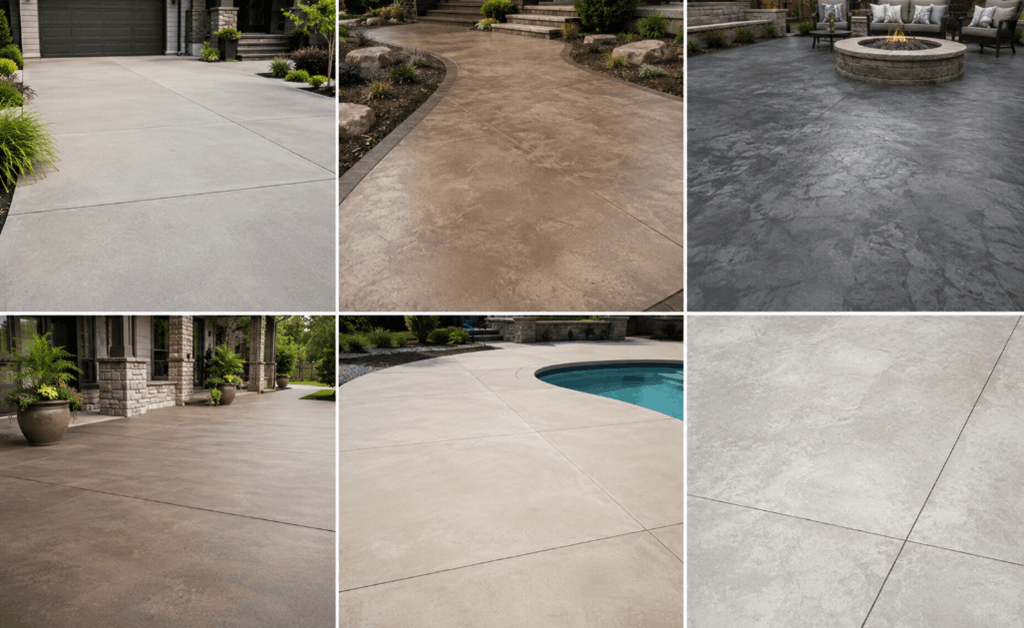
Earthy Tones: Tans, Browns, and Terracottas That Feel Right at Home

By a wide margin, earthy tones are what people ask for most. Tans, deep browns, that sun-baked terracotta – they sit easily next to natural things. Brick, timber fencing, sandstone, a garden full of native planting: all of it gets along with these shades. Lay a terracotta patio, and you get a loose, Mediterranean kind of mood, the sort that feels expensive and welcoming at once, which isn’t an easy combination to pull off.

The practical bit is worth mentioning. Earthy colors swallow dirt and small scuffs that would show up plainly on something pale. For a driveway that takes a daily beating, that matters more than you’d think, and it’s one reason colored concrete driveways in these tones hold up so well over the years.

Grey Tones: From Soft Silvers to Deep Charcoals

Forget the gray of an old sidewalk. We carry the whole range now. At one end, soft silvers that almost pass for white; at the other, charcoals dark enough to feel a bit moody. The lighter grays suit modern homes with white or rendered walls and pull the whole exterior together. Charcoal does the opposite job – it speaks up, and it works beautifully alongside dark trim and contemporary lines.

Caught in the middle? If you love honest, natural concrete but want it a touch more refined, a mid-tone gray with a brushed or exposed aggregate finish lands nicely. It’s one of those concrete driveway colors that flatters almost any home, and plenty of our clients at Bill’s Custom Concrete & Yard Drainage end up here, and few of them regret it.

Bold Colors: Blues, Greens, and Custom Mixes for a Standout Finish

Some people want their concrete to do more than blend in, and that’s where the fun starts. Deep slate blue carries a coastal, almost resort-like feeling – gorgeous against white render or beachside planting. Sage and olive greens slip into leafy gardens and quietly link the hard surfaces to everything growing nearby. If you’re hunting for concrete patio color ideas that stand out, this is the territory to explore.

And if you arrive with a very specific shade in your head, we mix custom colors too. Matching an existing feature, or chasing something you’ve never seen anywhere else – we can work it out either way.

Key Factors to Consider Before Choosing a Concrete Color

Matching Your Concrete Color to Your Home’s Exterior and Landscaping

No color exists on its own. Before you settle on anything, stand back and look at the full scene: your cladding, the roof, the window frames, whatever’s planted out front. Terracotta beside red brick can look wonderful. The same terracotta against a cool rendered facade can feel slightly off. Seeing the whole picture first saves you that kind of mismatch, and it’s how the best concrete color ideas usually come together.

How Climate and Sun Exposure Affect Concrete Color Over Time

Sun has a vote in how your color ages, whether you like it or not. Dark shades drink up heat, which gets unpleasant underfoot in summer and can wear faster where the UV is harsh. That’s worth keeping in mind with colored concrete for patios, where bare feet meet the surface all summer. Lighter tones throw that heat back and tend to suit open, sunny ground. We always factor in your local climate before suggesting anything, so the finish still looks right a few summers down the line.

Planning for Maintenance and Color Longevity

Sealing is the secret here. Every colored surface holds up better with it, since sealing shields the pigment from fading and keeps stains from settling in. We seal as part of our installs, then suggest resealing every two to three years, give or take, depending on how hard the surface works. One more thing: a mid-tone shade tends to age more gracefully than the extremes, hiding gradual wear better. Handy if low upkeep is high on your list.

Ready to Add Color to Your Concrete?

Coloring your concrete remains one of the easiest ways to lift a home’s whole exterior, and the options today really are good. Earthy warmth, a confident charcoal, a bold custom mix with some character – whatever you’re drawn to, we’ll help you get there.

Reach out to our team at Bill’s Custom Concrete & Yard Drainage to talk through your project and grab a free quote. We’d genuinely love to help you build something you’re proud to pull into every day.

Frequently Asked Questions

How Long Does Colored Concrete Last On A Driveway Or Patio? 

With a solid install and the odd reseal, you’re looking at 25 to 30 years, often more. Climate, daily use, and how regularly you maintain it all shift that number.

Can Existing Concrete Be Colored, Or Does It Need To Be Replaced?

Usually you can color what’s already down, using stains or tinted overlays – a sensible, cheaper route as long as the slab is structurally sound. We check each project before we recommend anything.

Will The Concrete Color Fade Over Time? 

A little fading is normal, especially with dark shades in full sun. Sealing regularly slows it right down and keeps the finish looking fresh for years longer.

Read More
Concrete is a Durable Choice for Outdoor Kitchen

Why Concrete is a Durable Choice for Outdoor Kitchens

Outdoor living spaces have become extensions of our homes, with outdoor kitchens standing out as one of the most sought-after additions for Oklahoma City homeowners. When planning an outdoor kitchen, material selection plays a crucial role in determining both aesthetics and longevity. Among the various options available, concrete has emerged as a superior choice that delivers exceptional durability, versatility, and value, especially in Oklahoma’s challenging climate.

The Oklahoma Climate Challenge

Oklahoma City residents understand the weather extremes that outdoor structures must endure. From scorching summer temperatures and sudden downpours to freezing winter conditions and occasional hailstorms, outdoor kitchens in OKC need to withstand it all. This is where concrete truly shines as a material of choice.

Concrete patios in Oklahoma City form the foundation for many outdoor kitchens, providing a stable and long-lasting base that can withstand the region’s temperature fluctuations. Unlike wood that can warp or stone pavers that may shift over time, properly installed concrete creates a seamless surface that maintains its integrity through Oklahoma’s seasonal changes.

Superior Durability Factors

Heat Resistance

An outdoor kitchen’s proximity to grills, smokers, and other cooking equipment demands materials that can handle high temperatures. Concrete’s excellent heat resistance makes it ideal for areas surrounding cooking stations. When properly sealed, concrete surfaces resist the scorching temperatures that can damage other materials, preventing scorching, melting, or discoloration even after years of use.

Water and Moisture Resistance

Oklahoma’s sudden rainfall doesn’t need to cut your outdoor gatherings short when you’ve chosen concrete for your outdoor kitchen. Modern concrete installations by experienced professionals like Bill’s Custom Concrete & Yard Drainage include proper sealing techniques that prevent water absorption and potential damage.

Additionally, concrete’s impermeability makes it resistant to food and drink spills that are inevitable in any kitchen environment. This resistance to staining and moisture intrusion significantly reduces maintenance requirements compared to porous materials like natural stone or brick.

Freeze-Thaw Durability

During Oklahoma’s winter months, materials that absorb water can crack and deteriorate when that moisture freezes and expands. Properly installed concrete with appropriate air entrainment resists this freeze-thaw cycle damage, maintaining its structural integrity throughout the winter months without developing cracks or spalling.

Design Versatility

Modern concrete offers remarkable design flexibility that many homeowners don’t initially realize. Far beyond the plain gray slab of yesteryear, today’s concrete patios in Oklahoma City showcase impressive design options:

Color Integration

Concrete can be colored through integral pigments, stains, or dyes to complement your home’s exterior and create a cohesive outdoor living space. From subtle earth tones to bold accent colors, the possibilities allow for personalized design expressions that maintain their appearance despite sun exposure and weather conditions.

Texture Options

Stamped concrete can mimic the appearance of more expensive materials like natural stone, brick, or tile at a fraction of the cost. These textured finishes not only enhance visual appeal but also provide practical benefits like improved traction when wet, an important safety consideration for outdoor kitchens.

Seamless Integration

One of concrete’s unique advantages is the ability to create seamless transitions between functional areas. Your outdoor kitchen countertops, cooking areas, and dining spaces can flow together without interrupting joints or elevation changes, creating both visual cohesion and practical functionality.

Cost-Effective Long-Term Investment

Modern concrete outdoor kitchenWhen evaluating the concrete driveway cost in OKC or concrete patios in Oklahoma City, many homeowners focus solely on initial installation expenses. However, the true value becomes apparent when considering long-term ownership costs:

Minimal Maintenance Requirements

Concrete outdoor kitchens require significantly less ongoing maintenance than alternatives like wood or natural stone. Typically, simple cleaning with mild soap and water is sufficient for regular maintenance, with resealing recommended every few years depending on usage and exposure.

Extended Lifespan

A properly installed concrete outdoor kitchen can last decades with minimal intervention. This longevity makes concrete an economical choice, despite potentially higher upfront costs compared to some alternatives. When calculating the cost per year of service, concrete consistently outperforms most competing materials.

Property Value Enhancement

Real estate professionals in Oklahoma City consistently report that well-designed outdoor living spaces, particularly kitchens built with durable materials like concrete, provide excellent return on investment through increased property values and enhanced marketability when selling.

Beyond the Kitchen: Complementary Concrete Features

Creating a cohesive outdoor living environment often involves extending concrete applications beyond just the kitchen area. Complementary features include:

Concrete Curbs in OKC

Decorative concrete curbing provides elegant landscape borders that define outdoor kitchen spaces while controlling erosion and simplifying lawn maintenance. These curbs create visual boundaries between cooking areas and surrounding landscapes while maintaining design consistency.

Integrated Drainage Solutions

Oklahoma’s heavy rainfall events demand proper water management. Experienced contractors like Bill’s Custom Concrete & Yard Drainage understand how to incorporate subtle drainage slopes and features into concrete patios that direct water away from cooking equipment and seating areas, preventing standing water issues.

Matching Pathways and Extensions

Extending your concrete installation from the outdoor kitchen to create connecting pathways or additional seating areas creates a unified design language throughout your backyard space, while maximizing the utility of your investment.

Professional Installation Makes the Difference

While concrete offers impressive durability, its performance largely depends on proper installation techniques. Professional contractors familiar with Oklahoma City’s specific soil conditions, weather patterns, and building requirements ensure longevity through:

  • Proper subgrade preparation to prevent settling and cracking
  • Appropriate concrete mix designs for outdoor kitchen applications
  • Correct reinforcement placement for structural integrity
  • Expert finishing techniques that enhance both beauty and function
  • Application of sealants formulated for outdoor kitchen environments

A Solid Foundation for Outdoor Entertaining

For Oklahoma City homeowners looking to create outdoor kitchens that withstand the test of time while maintaining their beauty, concrete provides an optimal combination of durability, design flexibility, and value. Its ability to resist Oklahoma’s weather extremes while offering nearly unlimited aesthetic options makes it an ideal material choice for creating outdoor living spaces that enhance both daily life and special gatherings.

When planning your outdoor kitchen project, consulting with experienced professionals ensures you’ll receive maximum benefit from concrete’s remarkable properties. For expert guidance on concrete patios, concrete curbs in OKC, or questions about concrete driveway cost in OKC, contact us at 405-755-3975 to discuss your project vision and receive a personalized consultation. Why Concrete is a Durable Choice for Outdoor Kitchens

Read More

Professional Concrete Contractor in Edmond Oklahoma

Professional Concrete Contractor Serving
Edmond, Oklahoma For 38 Years

Call Bill’s Custom Concrete & Yard Drainage at (405)755-3975 if you need a concrete contractor in the Edmond, Oklahoma area. Bill’s Custom Concrete & Yard Drainage has been serving Edmond since 1976 and our team has completed everything from the most complicated concrete jobs, to thousands of a concrete driveways, patios, and sidewalks and we have delivered amazing concrete structures every time.

We can help you to design the concrete patio, driveway, or sidewalk, that helps to increase the appeal of your Edmond property. We can even use decorative concrete to make your patio, driveway or sidewalk has that truly unique look and feel that fits the architecture of your home. This includes stamped, stained, and colored concrete to make your patio, driveway or sidewalk really stand out.

Many of our customers love the style of decorative concrete, and while we implement many types of decorative concrete, we try to encourage simple elegance when designing and installing your concrete patio, driveway, or sidewalk. We try to give you the proper balance of style with low maintenance when planning your decorative concrete project. One of the many things that makes our company stand out is that we carefully listen to your concerns and we work to design a project that meets and exceeds all of your expectations.

We Specialize in Concrete Driveways in Edmond, Oklahoma

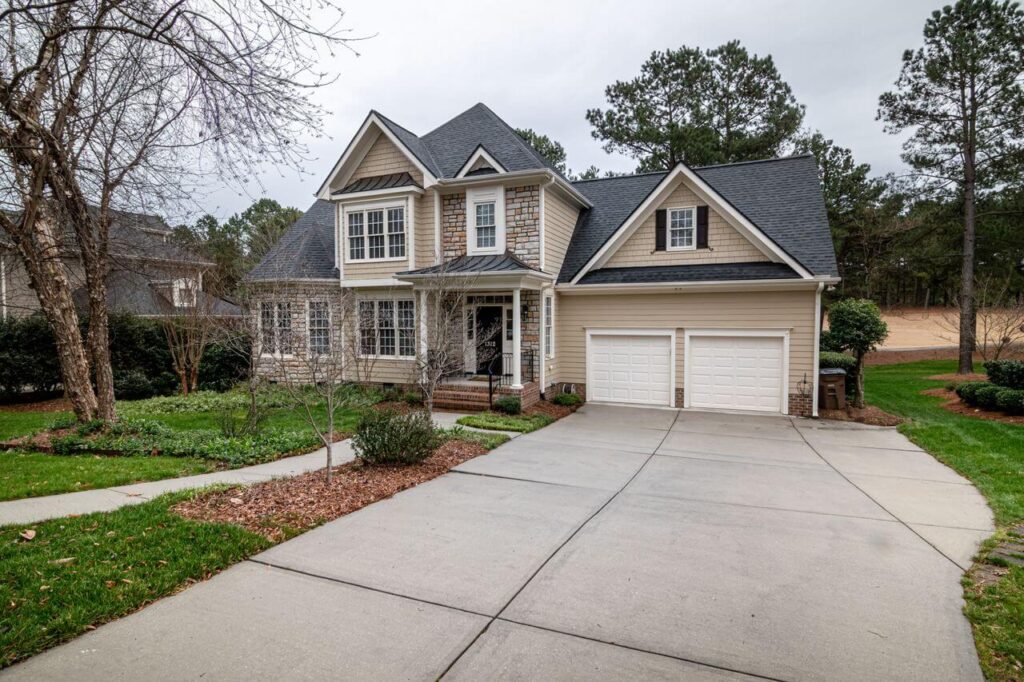
Decorative Concrete Driveway - Edmond, Oklahoma

Decorative Concrete Driveway – Edmond, Oklahoma

Our professional team at Bill’s Custom Concrete & Yard Drainage Services can design and create a unique concrete driveway that enhances the curb appeal of your home. We only use the highest grade quality products to ensure that your new driveway can withstand the tremendous pressure it will be under for many years. The only limit to the style and design of your new concrete driveway is in your imagination. Our concrete specialists have designed and created some of the most complicated driveway designs in the Oklahoma City Metro area. Our promise to our customers is that we strive to ensure that the completed project is everything and more that you expected. We have built the foundation of our company on ensuring our customers needs always come first.

Do You Need A New Concrete Patio For Your Edmond Home?

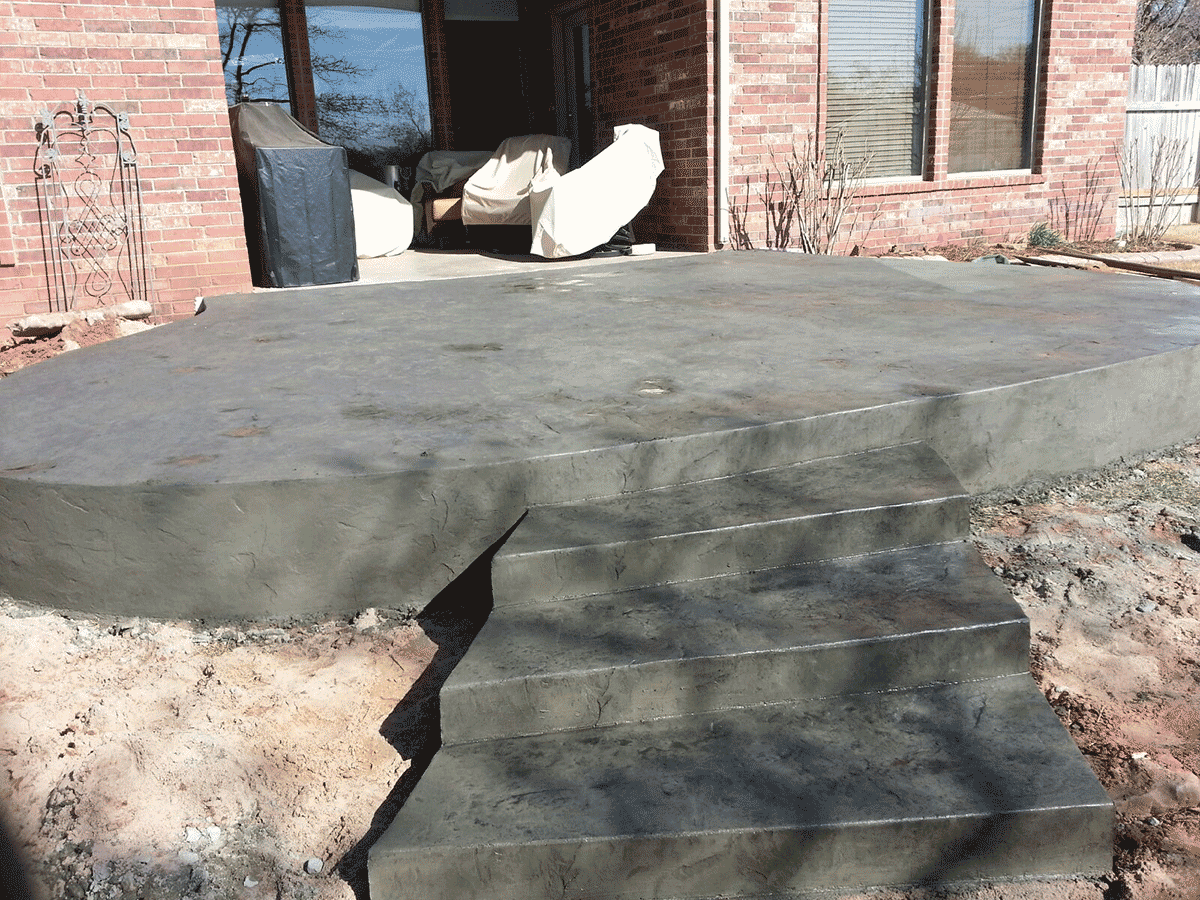
Decorative Concrete Patio and Steps Edmond, OK

Decorative Concrete Patio and Steps Edmond, OK

Our concrete professionals at Bill’s Custom Concrete & Yard Drainage Services have been designing some of the most amazing concrete patios in the Oklahoma City Metro area. Our team has built millions of dollars worth of concrete patios, each one uniquely inspired from the input of our customers. When we prepare to build a new concrete patio, we focus on the needs and goals of the customer. We give our clients creative concrete patio designs that can include the colors, styles, patterns, and shapes, that transform that design to the patio of your dreams. No project is too big or too small, we will work closely with you to transform that area into a place that your friends and family will enjoy for many years. Our goal for the last 38 years has been to complete your project right the first time. In fact our motto is: “There is only one way to do a concrete project, and that is the right way.” We strive to do your concrete project right the first time, on time, every time!

We Can Replace or Install a New Concrete Sidewalk

Freshly Installed Concrete Sidewalk - Edmond, OK

Freshly Installed Concrete Sidewalk – Edmond, OK

Working with an experienced contractor will ensure that your new concrete sidewalks last for many years. You have to have an understanding of the soil here in Edmond, Oklahoma to be able to lay cement properly. The temperature changes and movement of the clay can significantly reduce the strength of the sidewalk if not properly installed. Our concrete specialists at Bill’s Custom Concrete & Yard Drainage Services use our 38 years of experience to make certain that at least four inches of high-strength concrete is poured to withstand those fluctuations in the soil. Our team has done several thousand different sidewalk projects in the Edmond area. You can rest assured you are in good hands when you hire us to install or replace your concrete sidewalks.

Call Bill’s Custom Concrete & Yard Drainage at (405)755-3975 if you are looking for a concrete contractor in the Edmond, Oklahoma area. You can also visit the main page of our website at BillsCustomConcrete.com and browse through our pictures and see examples of our work and testimonials from our customers.

Read More