
Concrete is about as dependable as building materials get. But that reliability comes with a condition: it has to cure on its own schedule, not yours. Push it too fast, and you invite cracking, surface flaking, or worse – structural problems that cost real money to put right. We’ve watched people learn that the hard way at Bill’s Custom Concrete & Yard Drainage. How long does cement take to dry? Knowing isn’t just handy trivia. It’s the difference between a job done once and a job done twice.
Here’s the quick version. Concrete sets firm enough for light foot traffic in about 24 to 48 hours, but it doesn’t hit full strength until roughly 28 days have passed. The longer version has more moving parts. Several things affect the timeline, and understanding what happens at each point will save you a headache later.
What Affects How Long Concrete Takes to Dry?
Mix Design
The ratio of water to cement in your mix does a lot of the heavy lifting here. More water makes the concrete easier to work with, but it also drags out the curing time. Less water speeds up strength development, though it can be a pain to place and finish properly. There’s a trade-off either way.
Then there are admixtures – chemical additives used in professional work. Depending on what the project calls for, these can either speed the cure up or slow it down on purpose. It’s one more reason why high-quality stamped concrete Oklahoma City professionals factor mix design into every job from the start.
Weather, Humidity, and Airflow
Conditions on site matter more than people expect. When it’s hot and dry, the surface can dry out well before the concrete underneath has cured, and that mismatch leads straight to cracking. Cold does the opposite. It slows the chemical reaction – hydration – that gives concrete its strength. Drop below 50°F and things nearly stall.
Moisture in the air plays a part too. High humidity slows evaporation, and if you’re pouring in an enclosed space with poor airflow, expect the timeline to stretch. We plan every pour around the local climate, and it’s worth doing the same on your end.
The Three Stages of Curing
Stage One: Initial Set (0 – 8 Hours)
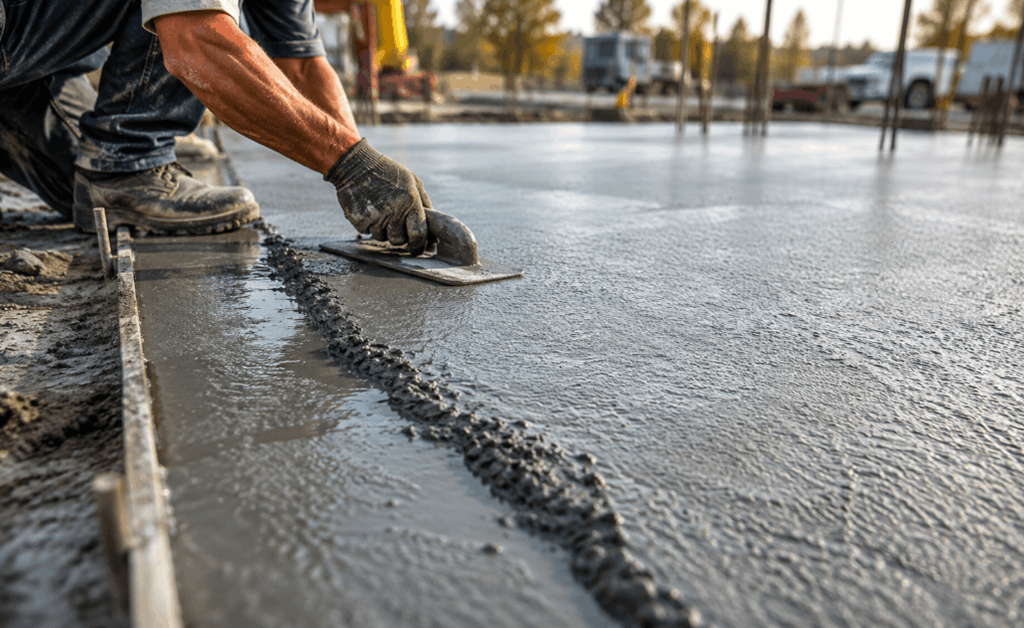
This is when concrete stops being a workable, movable material and firms into something solid. It usually happens somewhere between 2 and 8 hours after the pour, depending on your mix and the weather. The surface will feel firm, but don’t be fooled – it’s fragile. Foot traffic, dropped tools, or any weight at all can leave permanent marks.
Stage Two: Final Set (24 – 48 Hours)
By the one-to-two-day mark, concrete reaches its final set. Light foot traffic is generally fine now. Vehicles and heavy loads are not – keep them off. The concrete is still building strength quickly during this window, and any stress you put on it can quietly undermine how it performs down the line. If you’ve ever wondered about cement to dry and how long is really enough, this stage is where patience genuinely pays off.
Stage Three: Full Cure (28 Days)
Concrete gets to about 70% of its design strength in the first week. Full strength arrives around day 28. That’s the benchmark engineers and contractors rely on across the board. For driveways, slabs, and anything structural, waiting out the full cure before piling on heavy loads is simply the smart move.
Why It Pays to Listen to a Pro
We get the temptation to hurry. Timelines are tight, and waiting the better part of a month to use a fresh surface feels ridiculous. But cutting the cure short is one of the most common mistakes we run into – and one of the easiest to avoid.
Pouring concrete isn’t a walk-away job. We keep an eye on conditions, apply curing compounds when they’re needed, and shield fresh pours from rain, frost, and blistering heat. Small steps, big difference. Cured properly, a concrete surface can last decades. Rushed, it might start falling apart in a handful of years.
FAQs
Can I Walk On Concrete After 24 Hours?
Usually, yes – light foot traffic is fine after 24 to 48 hours. Just don’t drag heavy objects across it or walk on it in sharp footwear that could scratch or gouge the surface while it’s still hardening.
What Does Cold Weather Do To Drying Time?
It slows hydration considerably. Below 50°F, concrete takes much longer to reach usable strength. Below freezing, it can suffer permanent damage unless it’s properly protected.
Does Concrete Ever Stop Curing?
Not entirely. It keeps gaining a little strength for years. But the 28-day mark is where the industry agrees it has reached its functional design strength – and understanding how long cement cure takes is what helps you make smarter decisions from the start.
Get It Right the First Time
Concrete drying isn’t something to guess your way through. The variables are real, rushing gets expensive, and the right approach is what separates a surface that lasts from one that doesn’t.
Our team knows how to plan, pour, and cure concrete correctly for any job. Get in touch with Bill’s today to talk through your project and grab a free quote!

Rapheal Guinn at Bill’s Custom Concrete & Yard Drainage assists clients with concrete crack repairs, foundation work, and yard drainage solutions such as french drains and excavation.