How to Resurface a Concrete Patio​

How to Resurface a Concrete Patio​

Your backyard is supposed to be the place where you can spend leisure time with friends and relatives during warm weather days. Unfortunately, it is rather difficult to relax on cracked, stained, or uneven patios. 

Harsh climatic conditions and intensive foot traffic negatively impact any concrete slab, no matter how strong it is. The only thing that comes into mind is to demolish the old patio and create a brand new one. Fortunately, there is another solution that deserves attention, especially if you are concerned about concrete patio cost in Oklahoma City.

Homeowners often think that it is impossible to repair a deteriorated patio. They believe that only demolition and pouring a completely new slab are acceptable ways out. In fact, it might be better to choose resurfacing. This procedure presupposes the application of a special concrete overlay over your existing slab, covering all flaws and forming an excellent new surface. Consequently, it will save your efforts, time, and money. If you are wondering how to resurface concrete patio, we’ll consider this later in the guide.

In this article, we will talk about the many benefits that resurfacing offers and explain how professionals accomplish this task. These facts will help you make right choices regarding your patio restoration. Bill’s Custom Concrete has enough experience to make a patio ideal for its owner and prevent excessive spending on demolitions.

Advantages of Resurfacing a Patio

There are several important reasons why you might resurface a concrete patio rather than pouring an entirely new patio slab.

Very Economical Choice

It is rather expensive to demolish a deteriorated patio. It is also required to create a new concrete surface, which is pricey due to heavy equipment usage. As opposed to such demolition, resurfacing allows you to save money. What’s more, this method provides an opportunity to achieve an excellent concrete finish.

Lots of Opportunities for Aesthetic Improvement

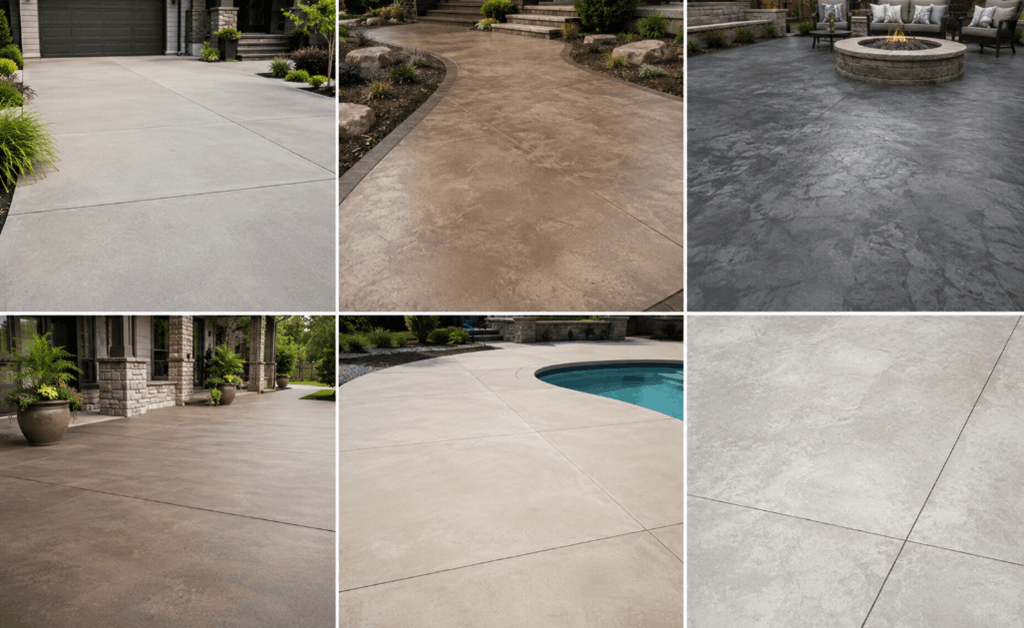
An overlay allows you to avoid ordinary looking gray slabs. The liquid concrete serves as an excellent canvas, on which our experts can create anything. It is possible to change the color of concrete by adding pigments matching the colors of exterior walls. Aside from that, it is feasible to stamp concrete to create the look of stones, bricks, or wooden slabs. Hence, this method allows obtaining an aesthetic finish for relatively low prices, making resurfacing a concrete patio a smart choice.

Durable and Weather-Resistant Finish

All modern resurfacing materials are characterized by great resistance to different environmental conditions. Due to advanced polymers, a polymer-modified overlay forms an extremely strong bonding layer. Therefore, the result of our work is resistant to UV radiation, frost, intensive foot traffic, and many other unfavorable factors. Apart from that, after sealing the surface, it is feasible to preserve its original look and quality for several decades, which makes concrete patio resurfacing a long-lasting solution.

How Professionals Resurface a Concrete Patio

For obtaining amazing results, it is crucial to follow certain rules. Despite the availability of many DIY kits, professional pouring is necessary for achieving a good bonding and curing process.

Initial Stage of Surface Preparation

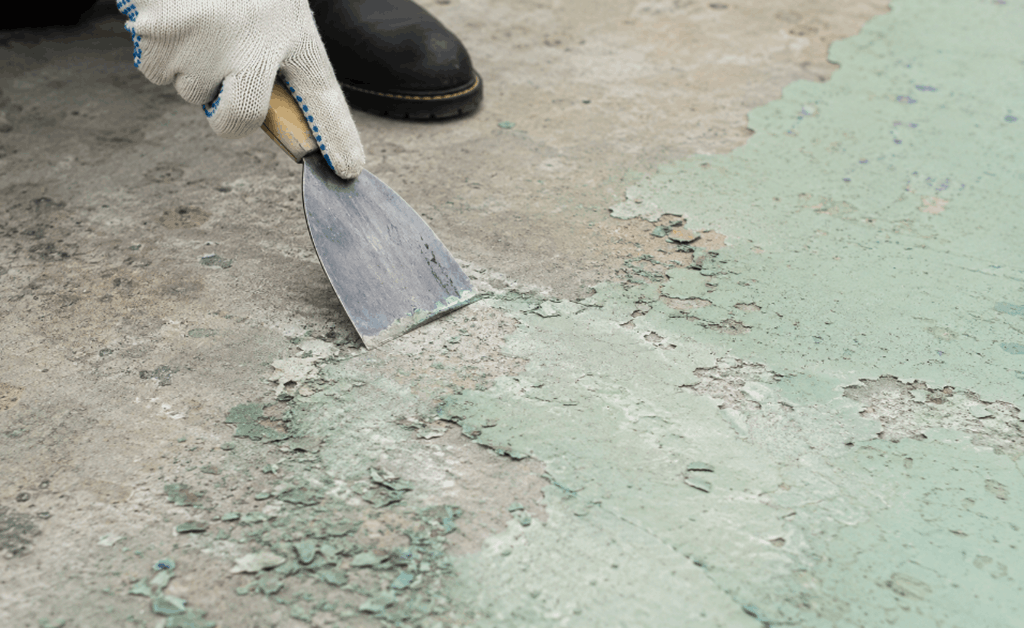
An important point in creating a strong bond between an existing slab and new material is proper surface preparation. Initially, we clean the patio using heavy-duty industrial pressure washers. Then, we grind the concrete surface using special grinding machines. Such treatment provides the patio slab with a rough surface that guarantees proper adhesion of a new layer. Moreover, we discover all cracks and damages and fill them with epoxy.

Application and Texturing of the New Layer

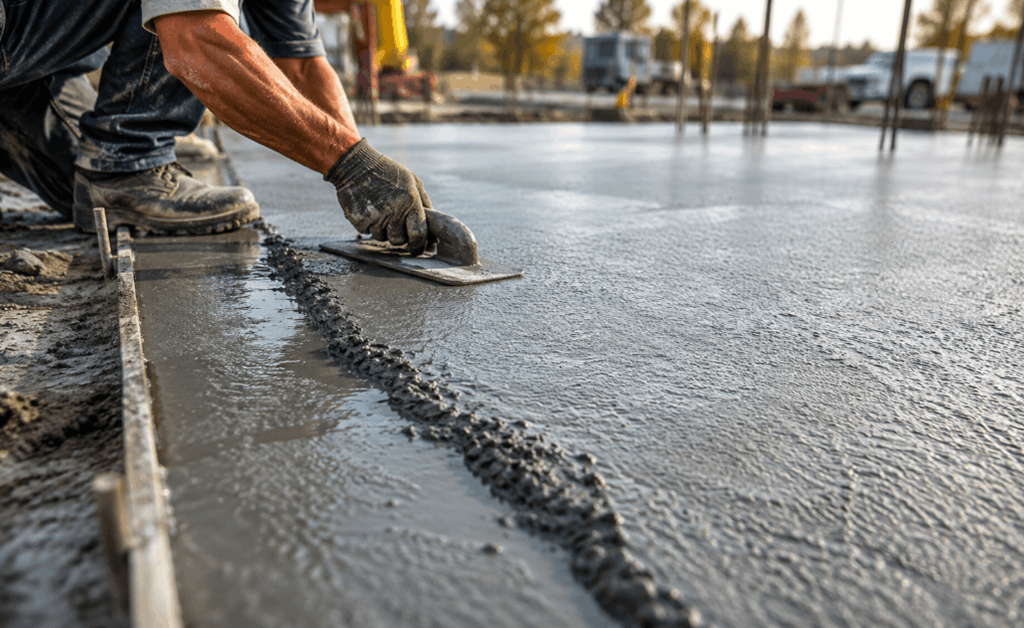
As soon as the surface treatment is completed, it is required to apply a concrete overlay. To perform this stage successfully, we mix this material and apply it to the surface using squeegees and trowels. Depending on the required layer thickness, it is sometimes necessary to pour several layers. During the time when the concrete overlay is still wet, our specialists carry out texturing and painting.

Curing and Application of Protective Coating

At the final stage, it is necessary to cure the patio slab. During this process, our experts carefully observe how the liquid concrete layer solidifies. After the curing is finished, we apply a protective layer to our product. Such clear sealer is highly efficient against different factors including rain and sun exposure, as well as oil stains.

Frequently Asked Questions

Initially, people tend to ask a few questions concerning resurfacing. Below, we offer answers to the most common of them! 

HOW LONG DOES IT TAKE TO RESURFACE?

Usually, the resurfacing process requires three/four days of work. Firstly, our experts prepare the patio surface and create a new layer. Afterward, we texturize the concrete surface and wait for its curing. Lastly, we apply a protective coating, leaving the patio slab for one day.

CAN RESURFACING BE CARRIED OUT ON HIGHLY DAMAGED SLABS?

If there are serious cracks, heaving, and sinking, the application of the overlay will bring no results because it will crack along with the existing slab. However, small cracks can be easily treated before pouring.

HOW CAN I MAINTAIN MY RESURFACED PATIO?

The maintenance of a new patio layer is pretty simple. You should regularly remove all kinds of dirt and debris from the patio surface. Apart from that, if your patio becomes dirty, try cleaning it using soft soaps and water. Every two/three years, we recommend applying a protective coat again.

Revitalizing Your Patio

Now you are aware that there is nothing difficult in creating an excellent-looking patio slab. This procedure requires little time and effort and ensures outstanding durability.

Our professionals at Bill’s can assist you in selecting the most suitable options. Just contact us and make a patio perfect!

Read More
Can You Pour Concrete Over Concrete

Can You Pour Concrete Over Concrete?

Have you ever had a look at an old and deteriorated patio thinking that there was the possibility of putting a new concrete layer over it? This is a concern that we get quite often at Bill’s Custom Concrete. It is certainly possible to pour concrete over existing concrete. However, doing it successfully requires some careful planning and preparations, as well as choosing the right materials for the job.

Let’s discuss in more detail what needs to be considered in order for you to get a perfectly looking overlay, and how options like concrete stain in OKC may also come into play for the final appearance.

By reading this detailed guide, you will find out the key points that need to be taken into consideration before answering…? We will guide you through the necessary steps in order to achieve greacan you pour concrete over concretet results and point out to the warning signals indicating that pouring over an old concrete slab is impossible.

Important Things That Need to Be Considered Before Pouring

It is important to mention at once that before pouring a single portion of the new concrete layer, we carefully examine the current condition of the base slab. The strength of the new slab depends greatly on that of the older layer. It means that if the base slab is unstable and starts moving, then this tendency will also develop concerning the newer layer. Therefore, it is important to carefully look through the surface in order to detect wide cracks, uneven settlement, and so on. So, can you put concrete over concrete? This is the first step. 

It is equally crucial to pay enough attention to the surface preparation. Indeed, in order to pour concrete over an old slab, it is crucial to make sure that it is clean and free from any dirt or oils, because otherwise there would be no chance of achieving reliable adhesion between the old and the new concrete layers. This is especially important when laying concrete over concrete. At the same time, the height of the new layer should also be considered. Indeed, a new layer may affect the functionality of other constructions in the area.

Steps to Pour Successfully

Crack Repair and Surface Preparation

Before proceeding to the pouring stage, we carry out repairs of all minor damages. Thus, for example, small cracks may be filled up with masonry sealer or concrete filler. After the drying of the repaired surfaces, we begin with their thorough cleaning. In this case, we usually use powerful pressure washers together with a strong degreasing agent to get rid of any dust and grime on the surface, which is an essential part of pouring concrete over existing concrete.

Application of the Liquid Bonding Agent

As mentioned above, the new concrete layer does not attach to the existing one without any additional actions. Therefore, the next important step is the application of a special liquid bonding agent to the whole cleaned surface. This is a type of chemical glue allowing to attach both layers reliably. During the application, we pay enough attention to making sure that it is applied evenly all over the surface according to the manufacturer’s instructions.

Concrete Pouring

After the bonding agent dries completely, we start pouring the new concrete layer. In this case, we begin from pouring material at the highest elevation point of the slab gradually continuing until completing the whole slab. While pouring, we use a straight screed board to level the layer. We focus closely on edges of the slab making sure that there are no spaces between the new layer and wooden form.

Final Steps to Take

At the final stage, the concrete layer is finished with either a hand trowel or with a broom, depending on the desired degree of slip resistance.

When Is It Not Possible to Pour Over Existing Concrete?

Of course, not all concrete slabs are eligible for having a new layer poured over them. In particular, we never recommend pouring over concrete slabs that have severe structural problems. For instance, if an existing concrete slab has wide and deep cracks, caused by the movements of the base layer, then these cracks will quickly repeat themselves with regard to the new layer, spoiling its appearance.

Also, we do not recommend pouring concrete over such slabs that have been damaged by the growth of tree roots. The latter need to be removed, so only then it would be possible to pour the new layer. Also, if the old concrete slab starts crumbling apart or sinking into the soil due to its instability, then pouring over it will lead only to a temporary improvement.

FAQs

What thickness of new slab is recommended?

In general, the recommended thickness of a new concrete layer is two inches. If we pour less material than this, there would be a big risk that the concrete would start cracking and crumbling rather soon.

Should we use wire mesh in a new concrete layer?

If we pour a concrete layer of two inches for a residential construction, then in most cases we do not need to use any reinforcing material. However, if we need to pour more material or if it concerns a commercial structure, then in order to provide it with maximum strength professionals may use steel wire mesh.

How long can an overlay last?

Under ideal conditions, when everything has been done in the proper way, a well-poured concrete overlay can serve several decades. Its lifetime also depends greatly on the condition of the base slab and the quality of the bonding agent.

Ready to Get Your Concrete Slab Repaired!

Pouring over the existing concrete slab is a good decision if you want to repair it without any serious inconvenience. However, this process requires a lot of attention as well as the professional vision needed for evaluating the condition of an old slab. If you have doubts about pouring or want the result to be flawless, contact Bill’s Custom Concrete today!

Read More
Design Ideas for Patios with Stamped Concrete

Simple Concrete Design Ideas for Patios with Stamped Concrete

We at Bill’s Custom Concrete excel in turning basic backyards into magnificent outdoor areas. Stamped concrete is one of our go-to solutions for achieving luxurious aesthetics without having to over-spend. This procedure includes pressing molds into concrete while it’s still wet, thus giving an imitation of various materials. 

Our stamped concrete solutions are highly resistant to weather conditions and require little care. Homeowners often ask about concrete patio cost, and we’re committed to providing options that suit a variety of budgets without compromising on style or durability.

Popular Stamped Concrete Patterns and Textures

When it comes to a new patio design, texture is usually among the first things to be discussed. There are multiple options when it comes to stamped concrete. You can choose from wood planks which give a patio a unique rustic charm. There are also classic patterns imitating masonry, such as bricks. And of course, you may opt for natural stones – slate and flagstone are the most popular choices. 

If you’re looking for simple concrete patio design ideas, our team can recommend straightforward yet stylish options that are both functional and attractive. While the latter tend to have uneven surfaces due to their natural origin, all our stamped patios are guaranteed to be smooth and even.

Choosing the Best Color Options

Color has the greatest impact on the overall visual aspect of a stamped concrete patio. We use integral pigments to color the concrete, as well as special surface releasing agents for added depth. Light sandstone or gray patios make the area look bigger and reflect the sun rays, thus keeping you cool on the hottest days of summer. 

Alternatively, there are rich terracotta and dark charcoal patios giving a warm, cozy feeling and adding character to any outdoor space. If you’re exploring concrete patio designs ideas, these color choices can help you achieve the perfect atmosphere for your outdoor retreat.

Stamp Concrete Design Ideas That Fit Any Patio

Pouring custom concrete allows you to create a patio in any imaginable shape. Small yards may need a few sweeping lines to open them up; for instance, curved and seamless slate texture would be perfect for such an area. Meanwhile, if you have lots of space, you can consider using different levels of stamping for dividing your patio into zones. 

Another good idea would be to combine two patterns and use them together, say, a light slate center and a dark brick border around it. If you’re searching for concrete patio ideas, these flexible approaches offer plenty of inspiration regardless of your space.

Custom Concrete Surfaces and Landscape Design

A patio is part of the landscaping, so it makes sense to consider the ways to integrate them into each other. Our designers can work out a stamped concrete surface which perfectly curves around the rest of your garden and blends into the surrounding nature

If you’re looking for inspiration, explore some of the top concrete design ideas for patios to elevate both style and function. You can use various plants around your patio, such as shrubs, or even add landscape lighting to complement it. Choosing patio furniture that matches the accent colors of your patio is yet another great idea.

Make Your Backyard Magnificent

It isn’t necessary to overcomplicate the process of upgrading your backyard. With stamped concrete, you get the ability to create a perfect design tailored just for your needs. Contact our team of custom concrete specialists right away and get your dream patio installed! 

Read More
Improve Drainage in Yard

How to Improve Drainage in Yard with Proper Grading

Having a soggy yard after a rain is extremely annoying to homeowners. Rainwater should naturally flow from your property, rather than gathering near your home. If your backyard is flooding all the time, your house may have major drainage issues. 

In our everyday experience, there is one powerful solution to such a problem: appropriate grading of your lawn. At Bill’s Custom Concrete, we understand precisely how to reshape your outdoor area to prevent further damage. When these issues seem overwhelming, reaching out to yard drainage professionals near me can be the best first step.

Problems with Yard Drainage

Bad drainage is dangerous as it leads to multiple consequences aside from just muddy shoes. Standing water drowns grass, causes mosquitoes to multiply, and erodes topsoil. The worst case scenario includes water accumulation near your home which inevitably results in moisture entering your basement and damaging concrete structures. Addressing how to improve drainage in yard situations will save you lots of money on future repairs.

What is Proper Grading?

Grading is a term used to describe a procedure during which a property owner changes their land’s level to make rainwater flow properly. Your ground should slope gradually away from your property’s foundation, allowing gravity to pull water in the right direction. By raising/lowering the level of your yard, you can create a perfect water drainage route. If you’re searching for yard drainage ideas, grading is a foundational approach that can make a big difference.

Steps to Fix Bad Drainage with Yard Grading – The Professional Way

Improper leveling of the soil is a problem solved by specialists who have access to necessary instruments. If you’re searching for drainage ideas for a yard, here is how we solve the issue.

Yard Assessment

We analyze your property and establish the location where water gathers. Besides, we determine the initial sloping of your terrain and identify any barriers like tree roots or walkways which could impact natural water flow. Our approach ensures we find yard drainage solutions suited to your specific situation.

Plan the Grading

We estimate the necessary drop in height to create a slope to guide water away from your home. For this purpose, we measure the drop using special surveying instruments. On average, the drop should reach six inches within ten feet from your property. When it comes to patios or hard surfaces, grading a patio for proper drainage is also essential to prevent water from pooling near your foundation.

Different Methods of Grading

Depending on how complex the problem is, there are several ways to grade your lawn. First, we may cut swales (gentle dips) into the surface to allow water to flow to the storm drain. Second, in order to prevent certain areas from accumulating water, we create small dirt hills called berms. Lastly, in case of significant drainage problems, we may consider installing a French drain.

Materials Used for Grading

However, moving soil alone does not solve your problem completely. You need to combine your efforts and use a certain amount of dense fill dirt, gravel, and topsoil to create a smooth surface. Since we deal with custom concrete, we may pour concrete in a specially leveled place creating patio or pathway with appropriate slope.

Protect Your Property from Flooding

Water is a common element, and you should learn how to protect your property from it. The best way to avoid any problems with flooding is making your lawn slope properly to channel water away. Contact us now, and we will give you a helping hand in solving drainage problems!

Read More
Life expectancy of concrete

How Long Does Concrete Last? Lifespan & Key Factors Explained

We deal with custom concrete work at Bill’s, and customers often ask about durability. Every customer wants to be sure in how long the driveway, patio, or foundation will survive. It is known that the material is extremely durable, but it is not indestructible. 

Whether you’re considering a standard driveway or a stamped concrete floor, knowing something about the expected lifespan of concrete can help you to plan for the future. Understanding the properties of the material will allow you to prolong the service life through proper maintenance. So, let’s see how long your project can survive and what can affect it!

Lifespan of Concrete Structures

As it was mentioned above, your concrete project is bound to have certain service life based on its function. For example, flat surfaces like driveways, sidewalks, or patios will serve you for twenty to thirty years. On the other hand, larger structures like buildings’ foundations and retaining walls should last at least fifty years. Some of them can live for up to one hundred years.

How long does concrete last? Such a gap exists due to the higher engineering requirements imposed on important infrastructure than on regular residential structures. However, your efforts to maintain such facilities can change it considerably.

Factors That Can Affect the Durability of Concrete Structures

Concrete Mix Design & Material Quality

The first factor is obvious since the concrete mix used is of primary importance. Our specialists create the optimal mix to obtain maximum strength and workability at the same time. We choose carefully selected aggregate and use chemical additives to increase durability, which has a significant impact on the lifespan of concrete.

Perfectly Conducted Pouring and Curing

Even if you purchase the most expensive mix, it will become useless if the site preparation is done incorrectly. Proper subgrade preparation creates a compacted base which is necessary to prevent further sinking and cracks formation. The skill of our experts ensures that the project is leveled ideally, while curing guarantees gradual evaporation of internal moisture leading to the maximum strength. This attention to detail is a key factor in maximizing the concrete lifespan.

Climate Conditions

Natural conditions also play an essential part in the longevity of the concrete structure. Factors such as life expectancy of concrete can be greatly influenced by the freeze-thaw cycle, which leads to expansion and contraction resulting in surface spalling and cracking. Constant exposure to temperature fluctuations, moisture, and corrosive substances like de-icers will lead to quick degradation during only several winter seasons. Planning and preparing for such factors while pouring the surface can prolong its lifespan.

Usage and Loading

According to the scenario of usage, your concrete structure will either last for longer or shorter period of time. Heavy loading caused by vehicles and machines is an additional load for your surface. The difference between your backyard patio and busy commercial docks is great.

Maintenance

Proper maintenance is also crucial as it prolongs the lifespan of the concrete surface. Regular cleaning removes contaminants that damage the surface. Moisture barriers, sealing, and timely repairing prevent cracks development and collapsing of the surface.

Conclusion

In general, concrete is highly durable and protects well if the right pouring procedures are followed. Our specialists at Bill’s Custom Concrete are aware of the problems related to skipping the curing process and using low-quality mixes. With information about contributing factors, you will be able to prolong service life! 

Read More