Best Drainage Solutions for Sloped Yard with Retaining Walls

Drainage Solutions for Sloped Yard with Retaining Walls

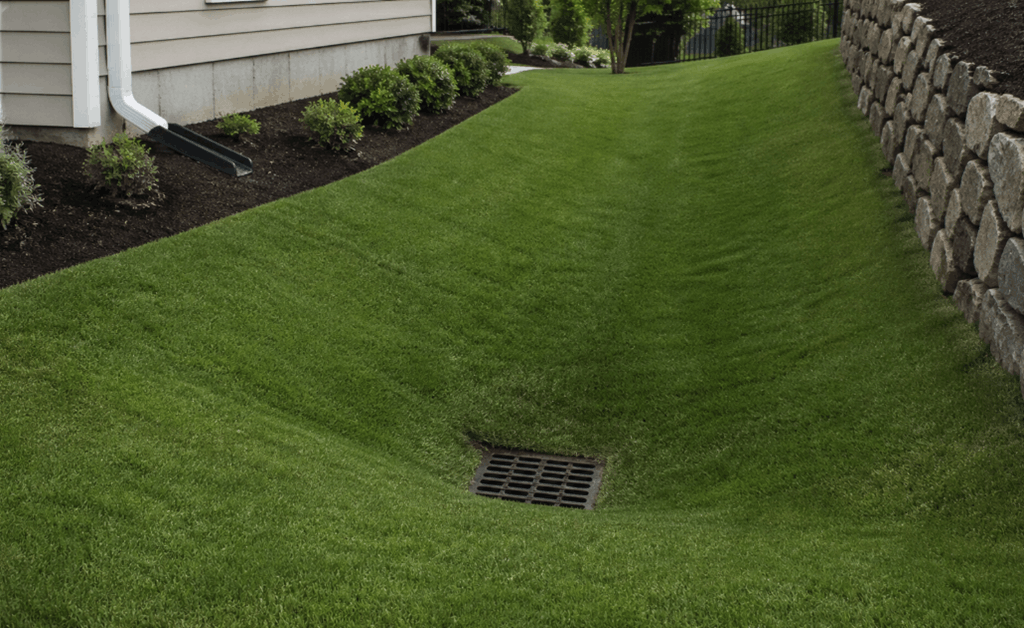
Dealing with runoff issues on a sloping property is a daunting task, especially when it comes to retaining walls. Without the right drainage solutions in place, excess rainfall can turn your perfectly planned and landscaped property into a muddy mess in no time. In fact, in the worst-case scenario, excess rainfall can even cause damage to your retaining walls. 

At Bill’s Custom Concrete, we understand the need for the right drainage solutions, not just for your property, but also as a means of protecting your investment. As one of the most trusted foundation repair companies in OKC, we are committed to providing solutions you can rely on.

Why Retaining Walls Need Drainage Systems

Retaining walls are not just meant for keeping the land level in your landscaping or preventing the soil from flowing down the side of the hill. In fact, when you have a property that requires sloped yard drainage, retaining walls need to be appreciated as structures that need to keep back huge amounts of soil and water. Water that gathers behind retaining walls exerts pressure on the retaining wall. This pressure, called hydrostatic pressure, slowly bows, cracks, or even collapses retaining walls over a long period of time.

This is why we always emphasize the need for drainage systems in retaining walls. A slope drainage system can make all the difference in preventing major issues down the line.

Common Drainage Problems We Encounter

We have encountered a number of different issues when it comes to the drainage needs of retaining walls. One of the most obvious issues that we come across is the problem of soil erosion. Water flowing down the side of the hill without any control also means that soil erosion occurs, leading to unsightly gullies in your lawn.

Hydrostatic pressure also occurs on retaining walls that are unable to drain excess rainfall, slowly weakening the retaining wall over a long period of time. The end result is the failure of the retaining wall due to poor drainage solutions, leading to the need for the retaining wall itself to be rebuilt.

Proven Drainage Solutions That Work

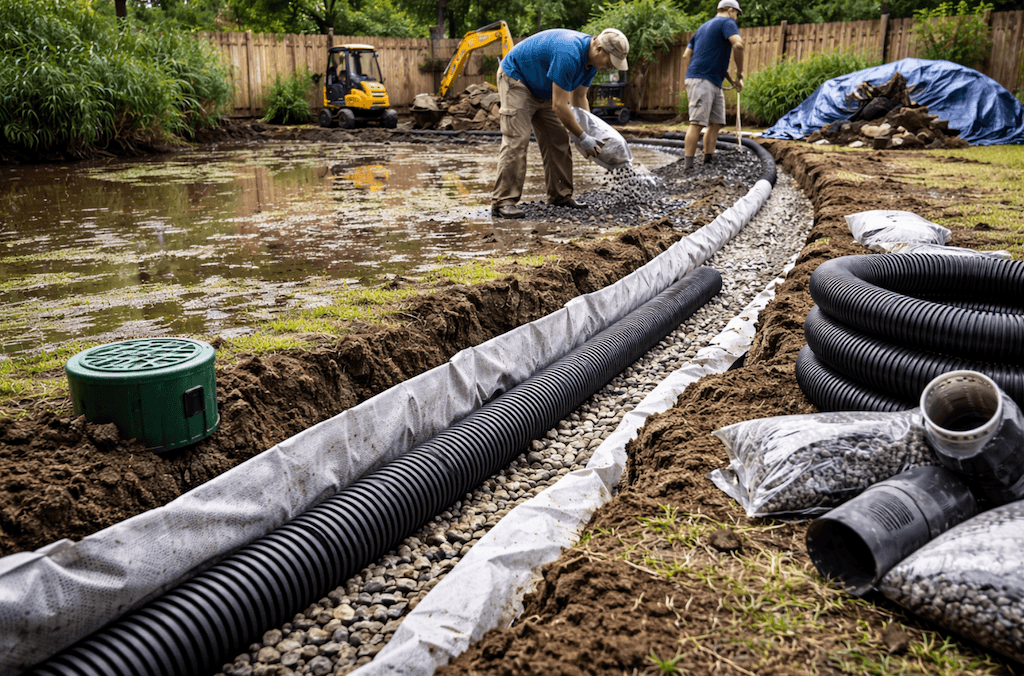
Our team has several methods that we employ to ensure that the water continues to drain. Our best solution is using French drains. These are pipes with holes drilled along their sides. We lay these along a trench filled with gravel at the back of the retaining walls. The water collects here and then flows away from the retaining walls before it becomes too much. Our preferred location is at the bottom of the retaining walls, as it is more likely to collect water. If you’re searching for effective sloped yard drainage ideas, this approach is both proven and widely recommended.

Weep holes are used as a means of relieving pressure. The pressure is usually built up as a result of the hydrostatic pressure. To resolve this, we drill weep holes at intervals along the lower section of the retaining walls. The water then drains. Although it is not as complicated as other methods, it is surprisingly effective.

The use of gravel is another means of creating a system of drainage. Behind our retaining walls, we create a system of drainage using gravel. We do not fill the space with dirt, as it would hinder the natural flow of water. The dirt would create more pressure. The space is filled with large pieces of gravel, which allow water to flow down to the French drains.

Getting the Drainage Right From the Start

Every sloped landscape is unique, depending on the type of soil, the grade, and the rainfall conditions in the area. We have learned over the years it takes a professional eye to assess the potential problems before they become an expensive repair job. We assess the natural water flow in your landscape, the drainage capabilities of the soil, and create a system that works with the landscape, not against it. If you’re searching for drainage solutions for a sloped yard, our expertise ensures your property will remain protected and functional.

Proper drainage is not just about keeping the water from damaging the retaining walls; it is about creating a landscape that will perform beautifully year after year. If you are considering a retaining wall project or are experiencing drainage issues with your sloped landscape, we are here to help create a solution for you to protect your investment for years to come! 

Read More
Clean Patio Pavers Without Removing Sand

How to Clean Patio Pavers Without Removing Sand

Over the years, we have been able to install thousands of patio paver systems, and one of the most common questions that we receive from consumers is how they can maintain their pavers in like-new condition without disturbing the sand that has been placed between them. 

Sand that has been placed between the pavers is not simply used as a cosmetic touch. Rather, it is used as part of the entire system of the patio pavers. If you were to remove the sand from between the pavers, it would cause problems as it would no longer keep the pavers in place, would cause weeds to grow, and would result in an uneven surface on your pavers. 

At Bill’s Custom Concrete, we understand these challenges and strive to help homeowners protect their investment. The good news is that you can maintain your pavers in that sparkling clean condition without disturbing the sand that has been placed. If you’ve ever wondered how to clean patio pavers effectively, we have refined our techniques after working on numerous custom concrete and paver installations and would be more than happy to share our expertise with you! 

Sweeping and Debris Removal

The first part of the paver cleaning process that we always recommend to consumers before using any water is to dry-clean them. Many homeowners ask about the best way to clean patio pavers, and the best method to do this would be to use a stiff-bristled broom to sweep the surface of the pavers as well as any debris or leaves that may have accumulated on your pavers. 

It’s important to keep in mind that when sweeping the area between the pavers, you must avoid sweeping too aggressively as this could cause problems. A leaf blower on a medium speed is a good idea to blow off any debris that has accumulated in the corners or between the pavers.

Low Pressure Rinsing Techniques

When it comes time to rinse off the pavers, the key is to take it easy. The temptation to grab a high-pressure hose and blast off all the debris may seem like the best solution, but it is also the fastest route to having to pay to have the sand replaced so that it can be put back in between the pavers. One of the most important steps in patio paver cleaning is using just enough pressure to clean the surface, without disturbing the sand joints.

The solution that we recommend is to grab your average garden hose with a spray nozzle that has been set to soft spray. Start on one side of the patio and work your way across the pavers, keeping the nozzle at least 12 inches away from the pavers as you go. This will give you enough power to get the job done without forcing water down.

If you have some particularly difficult stains, you can let a solution sit on the pavers for a few minutes before rinsing it off. This is the best solution to your problem without forcing water to blast the stain out of the pavers. Taking these steps ensures you are cleaning patio pavers without risking damage to their foundation.

Preserve Your Investment with Proper Care

Great news! It’s possible to take care of your patio pavers without being harsh on the foundational elements that help keep them grounded.

The key here is to realize that the sand in the joints is working very hard to prevent the movement of the pavers and to ensure that the water drains properly. This is not just about the looks of the pavers; it’s about the entire system we’ve worked so hard to create in the first place.

If you use these techniques regularly, you can extend the life of your patio by many years without having to go through the costly process of re-sanding and re-leveling your patio. Your patio is part of your home, and by taking good care of it, you can enjoy it for many years to come! 

Read More
French drain systems Oklahoma city - French drains Edmond Ok

How Does a French Drain Work in a Basement?

Water is the worst enemy of a soundly constructed house foundation. There is nothing worse than walking down the stairs and finding the concrete floor of the basement soaked with water or recognizing the characteristic odor of mildew. At Bill’s Custom Concrete, we know the destructive nature of unregulated water in your house. Water can undermine the integrity of your house and pose serious health risks to your family.

Fortunately, there is a proven method that handles water intrusion very well. They are referred to as French drains in Oklahoma City. You may think that it is a fancy term, but it is very simple and very efficient in keeping your basement dry. We recommend it to our customers because it gets to the root of the problem, rather than simply fixing the symptom. 

How does a French drain work? If you have problems with basement moisture, it is essential that you understand how a French drain works because it is the key to having a dry basement.

Key Elements of the System

To fully comprehend how it works, it’s necessary to comprehend its components. The French drain isn’t a single unit but rather a series of parts functioning together. The process begins with digging a ditch surrounding the interior of your basement floor. This includes breaking through your existing concrete to get to the soil beneath it.

Within the trench, we install a perforated pipe. This pipe contains thousands of minute holes to allow water to flow in but not large pieces of debris. We also fill the trench with clean gravel or crushed stone that has been washed. The gravel serves as a filter and ensures that water is able to flow towards the perforated pipe

Finally, we fill up the trench with new concrete, and your floor is back to normal as the system operates unnoticed beneath your floor. In most cases, in a modern basement setup, such a system is connected to a sump pit and a sump pump that forces the water away from the house.

How the Water is Removed

How a French drain works is based on one simple principle: water always seeks the path of least resistance. When it rains or when the snow melts, this causes your soil outside your foundation to become water-saturated. This creates what is called hydrostatic pressure. Hydrostatic pressure presses against your foundation walls and at the cold joint where your foundation walls and floors meet. Without a relief valve, this water seeps into your home through tiny cracks.

Rather than trying to push through the concrete, it has an easier time flowing through the gravel bed we put in. Because it’s much simpler to flow through gravel than it is to flow through dirt or concrete, it easily drains into the trench.

The water is now ready to be transported through the pipe. Gravity does the rest. We install these pipes with a slight slope so that the water continuously flows towards the sump pit. Once the water level in the sump pit reaches a particular level, the sump pump turns on automatically. This sump pump sends the water away from your basement towards a drainage area.

Why We Recommend Installing One

Do french drains work? Absolutely, the first and most obvious benefit of this setup is a dry basement. The benefits of this setup do not stop with getting rid of the puddles, though. By relieving the hydrostatic pressure that we were talking about earlier, you are actually preserving the integrity of your foundation.

Additionally, a dry basement is a healthy basement. This is because you will not encounter mold or mildew growth by eliminating the source of moisture. This will improve the air quality in your home, and it’s not only limited to the basement. Lastly, a functional drainage system will protect your home’s value. A home that is known to have a dry basement is a very attractive feature for potential home buyers.

Protecting Your Home from Moisture

We understand that foundation issues can be very stressful, but if you do not take care of them, it will end up costing you much later on. The French drain is an excellent means of getting rid of water intrusion issues for good. The water will not have time to damage your home before it is redirected to safety. If you are fed up with having to worry about rain every time it rains, then it is time to talk to us at Bill’s about your drainage systems!

Read More
Seal My Concrete Driveway After Pressure Washing

Should I Seal My Concrete Driveway After Pressure Washing?

The driveway in your home is most often the first thing that your guests notice when they arrive. Your driveway has to withstand many things. This includes large vehicles, bad weather, and, of course, the occasional spillage of oil. Not only must your driveway look good, but it is essential to keep in mind that it represents an expensive investment.

Concrete driveways in Oklahoma City are particularly susceptible to the effects of the local climate. One of the most common inquiries we receive from homeowners at Bill’s Custom Concrete has to do with whether or not to seal their concrete driveway after pressure washing. Should I seal my concrete driveway?

Pressure washing is a great means of cleaning away dirt, grime, and mildew, and it will make concrete look good as new. However, you can leave your driveway vulnerable to damage if you don’t seal it after you have cleaned it.

It’s often the sealing that will help keep that clean look in place and extend the life of your concrete driveway and sidewalk. Sealing a concrete driveway can make a significant difference in long-term durability and curb appeal.

Understanding the Process

Pressure washing is a technique of using high-pressure water spray for removing loose paint, mold, grime, dust, mud, and dirt from the surface of objects and buildings. This is the most efficient way of cleaning the pores of concrete.

Applying a seal to concrete is called concrete sealing. The sealer will either be absorbed into the concrete or create a barrier on the surface. The purpose of applying the sealer is to prevent water, oil, and other substances from penetrating the concrete. When you seal a concrete driveway, it adds a vital layer of protection.

Rationale for Sealing

Applying the sealer to the top of the concrete after pressure washing is very helpful. The first and most important benefit is its protection against moisture. The truth of the matter is, concrete is porous. In other words, it is sponge-like. When water enters its porous surfaces and freezes, it expands.

Another major benefit is that it is stain-resistant. The oil, grease, and other fluids in a car can create ugly stains on the surface. It is difficult to remove such stains as they can seep into the surface. Sealing can prevent such stains from seeping in and can be easily cleaned up. In addition, it can improve the color of the concrete surface to give a professional look to your house.

Things to Think About Before You Seal

Of course, there are plenty of benefits, but there are a couple of things that you have to keep in mind. You cannot clean and seal your concrete on the same day. The concrete has to be dried completely before applying a sealer on it. If you don’t, you may get a cloudy effect or your sealer may peel right off.

The state of your concrete matters as well. If your driveway has deteriorated badly, a sealant won’t work. You should fix the driveway before applying a sealant. The next thing that matters for the application of a sealant is the conditions. It should neither be hot nor cold nor rainy.

The Right Decision

Whether you should seal your driveway or not depends on what you want to achieve. If you want to increase the lifespan of your driveway, then sealing it would be a good move. This would be especially important if you live in an area that has cold temperatures and rainfall, since the sealer can reduce the risk of weather-related damage.

If you do not know the status of your driveway or which type of sealer you should use, it may be best for you to get professional advice. This will save you money and time in the long run. Bill’s will assess your concrete and ensure that everything is done correctly.

Protect Your Investment with Professional Help

Pressure washing is an excellent place to begin when it comes to driveway maintenance, but to shield the concrete as it should be protected, having an effective sealer is an important follow-through. It protects the driveway against the elements, prevents stains, and maintains your property.

Are you ready to provide the care and attention that your driveway deserves? We’re the team for you. We will be the ones doing the heavy lifting, from the deep clean to the seal, and we will have your driveway looking fantastic for years to come!

Read More
stain a concrete patio

How Do You Stain a Concrete Patio the Right Way?

The gray concrete slab may have some use, but it will not likely impress anyone. We believe that your property can be treated to something better. One of the most effective ways of giving the patio, for example, a makeover without the hefty cost of tearing down what is already there is concrete staining. It gives the patio depth and elegance and an expensive look without the hefty price tag.

Over the years, we have fixed enough homemade disasters to know that staining isn’t just a process of painting. Concrete is a very porous and harsh surface to work with. If you cut corners on this process or skip a step, your stain will start peeling, fading, or becoming spotty within a year’s time. 

Our crew, when working on a staining project, has a set procedure in place to ensure that our finish will last for years to come. This is a look into how we achieve a professional finish at Bill’s Custom Concrete. Whether you want to learn about the sidewalk repair cost or our staining services, get in touch today! 

Surface Preparation is Not Negotiable

The key part of what we do is what happens even before we open the stain. If the concrete isn’t spotlessly clean and ready to absorb our stain, the stain won’t stick. First, we remove everything from the patio and sweep away any loose debris. Next, we clean the patio using a top-of-the-line degreaser and brush away any dirt and oil spots.

With the surface clean, we can start the repair of the cracks. How do you stain a concrete patio? Staining a crack means they will not be hidden, but will actually be highlighted because the stain will collect inside the crack. To remove these defects, concrete filler needs to be applied. 

The last step of patio preparation could either be acid etching or grinding. This will help the concrete pores open up so that the concrete patio stain adheres to the surface of the concrete rather than just sitting on top of it. The patio needs to be washed and dried.

Choosing the Right Type of Stain

We help our customers choose which type of stain they should apply. There are two types of stains. These stains can be either acid-based stains or water-based stains. This choice solely depends on the customer and the design they want to create. Acid-based stains react chemically with the minerals present in the concrete. These reactions cause earthy colors of tans, browns, and terracottas.

With water-based stains, there is more of a coating process involved. The colors are poured into the concrete pores with no reaction whatsoever. This is because there is a much larger array of colors available, such as bright blue, green, and even opaque grays. In a situation where an entire patio needs to be stained with the same color, we would recommend using water-based stain.

Applying the Stain for Maximum Effect

Then, when it’s time to apply the stain, we have found that using the pump sprayer gives us the best results. We divide the area and make our way around, making sure that we don’t get any lap marks, which would be areas that accumulate the stain. When working with the acid stain, we apply the stain and then scrub the liquid onto the surface.

Ultimately, it is always recommended to go for thin coats and not a thick coat. This is to ensure that there is no pooling and to be able to control the amount of color that we want to achieve. At all times, safety is the priority in such a procedure. We use eye protection, gloves, and boots, especially when dealing with the acid stain. 

Once the stain is applied, we then wait for it to dry according to the time recommended by the manufacturer, which is at least 24 hours. Stained patio concrete can dramatically improve curb appeal.

Sealing to Protect the Investment

The process is not finished until the sealer is applied. An unsealed patio with staining would be much the same as if a vehicle was uncoated, since either the sun or the water will eventually damage it. This is why we apply a clear and good-quality sealer that protects it from water, grease, and the sun. Choosing the best stain for concrete patio projects will ensure a lasting finish.

It comes in a variety of gloss levels, from flat to very high gloss. We would normally recommend a solvent-based acrylic sealer for outdoor patio floors because it breathes well and is very durable. It’s very easy to maintain after that. We tell our customers to sweep the patio clean and reapply a new coat of sealer in a few years to keep it looking its color.

A Lasting Transformation

The process of staining concrete patios is something that cannot be done in a rush. Why? Because it is a process that also takes skill and patience on the part of the technician. However, with the right technique, a concrete patio that is dull and unattractive can be made into a beautiful feature of the house. If you’re searching for the right stain for concrete patio renovations, always consult with the professionals at Bill’s Custom Concrete for the best results! 

Read More